
Linz, Austria. 3 to 7 September 2025 — MolinoLab was present at the latest edition of Ars Electronica, one of the most important international festivals of art, technology and society, held since 1979 in Linz, Austria. At a gathering marked by the question “PANIC yes/no”, the MolinoLab team collaborated on two projects and presented Sinfonía Biótica in the European circuits of creation and cooperation.
We are making available the article in MOSAIC, from the UOC, on the echoes of Ars Electronica:
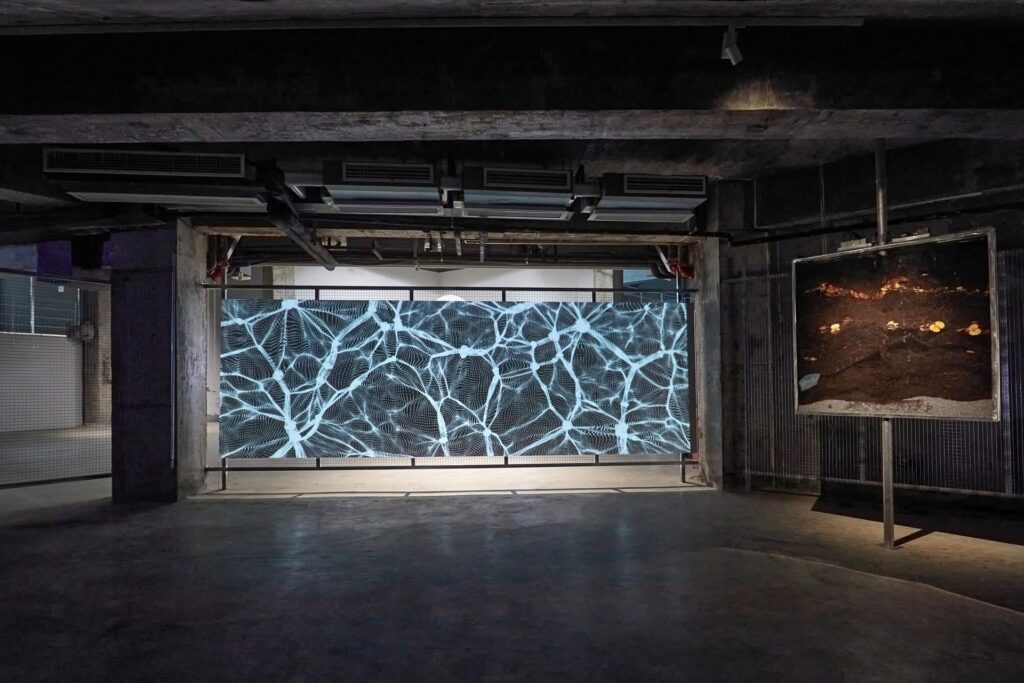
Computational Compost: digital waste and organic fertility
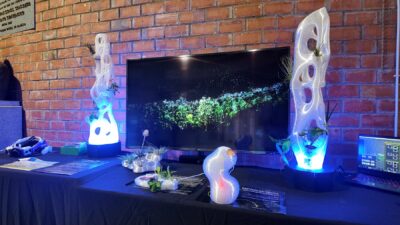
One of the pieces in which MolinoLab took part was Computational Compost (2023), directed by Marina Otero Verzier and produced at Tabakalera (Donostia / San Sebastián). The project addresses the environmental impact of data storage: behind the metaphor of the cloud lie infrastructures that consume energy, water and raw materials, generate heat and emit CO₂. The prototype proposes a synergy between technology and ecology: the residual heat of computers running simulations of the origin of the universe feeds a vermicomposting system with earthworms and microorganisms, which transform organic matter into fertile soil. Celestial and biological bodies are bound together by metabolism, fermentation, decomposition and regeneration. The work also includes a film starring the quipu MCHAP 0780, a pre-Columbian device from the Museo de Arte Precolombino in Santiago, which invites us to think about other possible digital futures. Fernando Fernández collaborated on the installation of the piece in Linz, integrating the project into the festival space.


Ritual Device for Fungal Humus: the sound of fungal metabolism
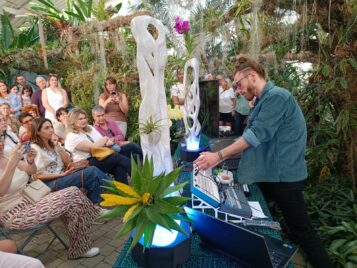
In parallel, MolinoLab took part in The Ritual Song of Fungal Humus, by Santiago Morilla, together with Joaku de Sotavento, Coco Moya (Menhir) and Fernando Fernández (b1tdreamer). The installation turns a shiitake-growing greenhouse into a sound instrument in which fungi and visitors generate polyphonic landscapes in real time. Electrodes capture the electrical activity of fungal metabolism and translate it into MIDI signals that trigger vocal samples created by Coco Moya and inspired by the polyphonies of the Baka pygmies. Sensors in the floor register the visitors’ footsteps, which join the composition with higher pitches that intertwine with the deep voices of the mycelium. The subtitle of the piece sums it up: “We Should All Be Musicians, Dancers, and Mushroom Cultivators (At the Same Time)”. The technical system MYCOTUNE v.1.0, battery-powered and with recording, also allows biosonifications of other living organisms outdoors. The piece invites us to reflect on what it means to care for a healthy soil in our context, and on how that care can transform cultivation, food and our life together with other forms of life.

Sinfonía Biótica: a presence in European networks
MolinoLab used Ars Electronica to present Sinfonía Biótica — interspecies creative ecosystems, the virtual reality experience that uses electrical signals from living organisms to generate a generative immersive environment. The aim was to give visibility to the research, to meet interested people, to open collaborations and to weave networks within Creative Europe. The connection with projects such as Ritual Device for Fungal Humus is direct: both use Biodata devices (open hardware based on Arduino ESP-32) to amplify the electrical signals of living beings and turn them into MIDI data, and both share sonification as a way of translating interspecies communication. Sinfonía Biótica explores the aerial world of trees; Ritual Device, the underground world of mycelium. Together they widen an ecosystem of works that make the complexity of the networks of life audible.
A festival for reflection
Ars Electronica 2025 brought together 122,000 visitors and 1,472 artists, scientists and activists from 83 countries around the tension between panic and action in the face of artificial intelligence, the climate crisis and social reconfiguration. MolinoLab took part in this setting with projects that place art, science and ecology on the same plane, where digital waste can nourish the earth and fungi can make music with those who inhabit them. The presence in Linz makes it possible to give visibility to the work of MolinoLab, a space for artistic and cultural creation in the west of Salamanca, within the international European circuits, and to look for allies for future developments.
For more information about the projects: