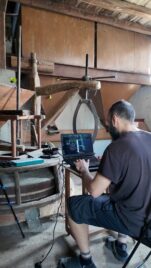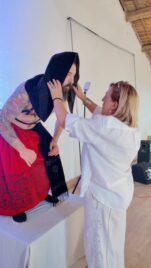

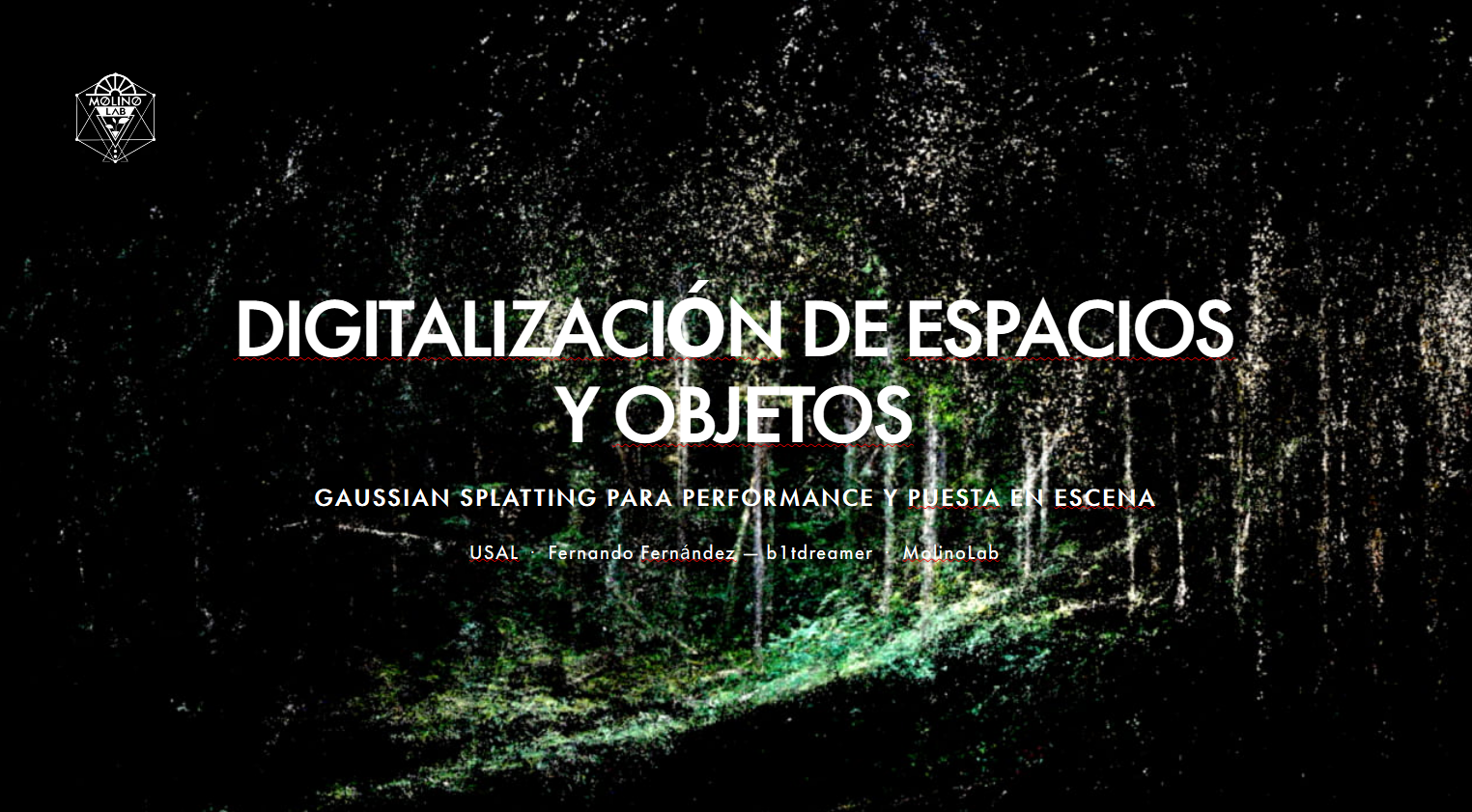
What is the difference between filming a space and digitising it so that you can go into it afterwards? That is the question with which the Digitisation with Gaussian Splatting workshop begins, a four-hour practical session at the University of Salamanca. We learnt to capture objects and spaces with a mobile phone, to clean them up and to turn them into virtual environments you can move through. We started from the experience of Sinfonía Biótica, which has digitised botanical specimens with this technique for virtual reality installations presented at BIME 2024 and Ars Electronica. From there we looked at how splatting opens up new possibilities for the stage: archiving a place that no longer exists, building virtual stage designs, or having a camera enter a giant object.
The workshop combined theory and practice in three steps. First we captured an object with Scaniverse, following the golden rule: slowly, with a lot of overlap and with fixed lighting. Then we scanned a real space and cleaned it in SuperSplat. Finally we took the splat into TouchDesigner to think of it as a scene, in which the virtual camera becomes direction, and its speed, height and pauses become dramaturgy. We closed with a discussion of duration, the ethics of digitising other people’s spaces and bodies, and how this sits with room light and projection.
Presentation