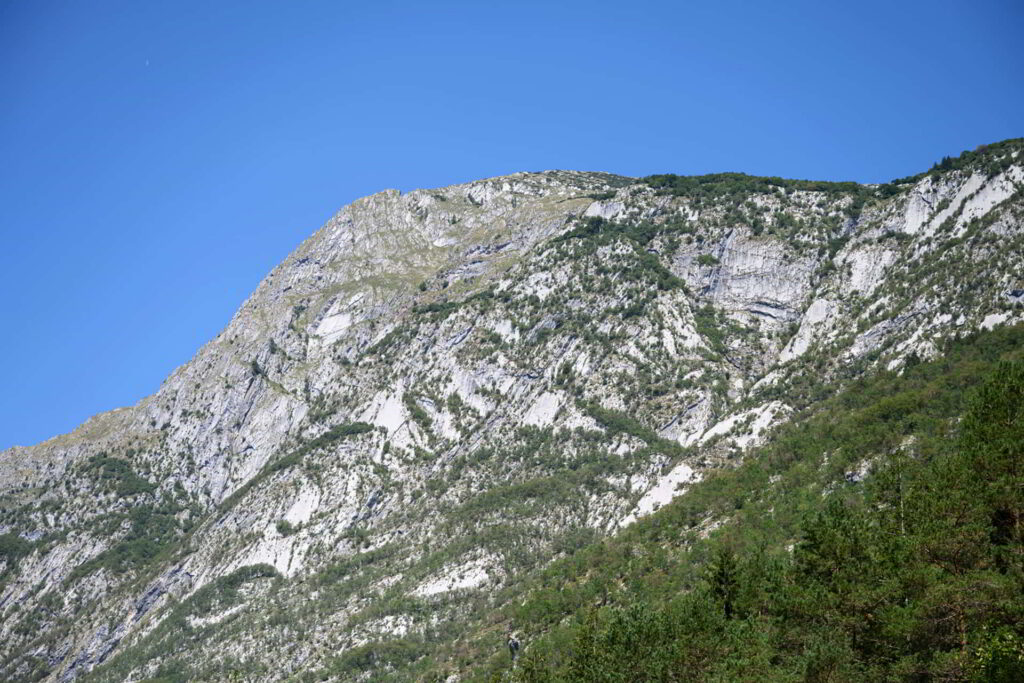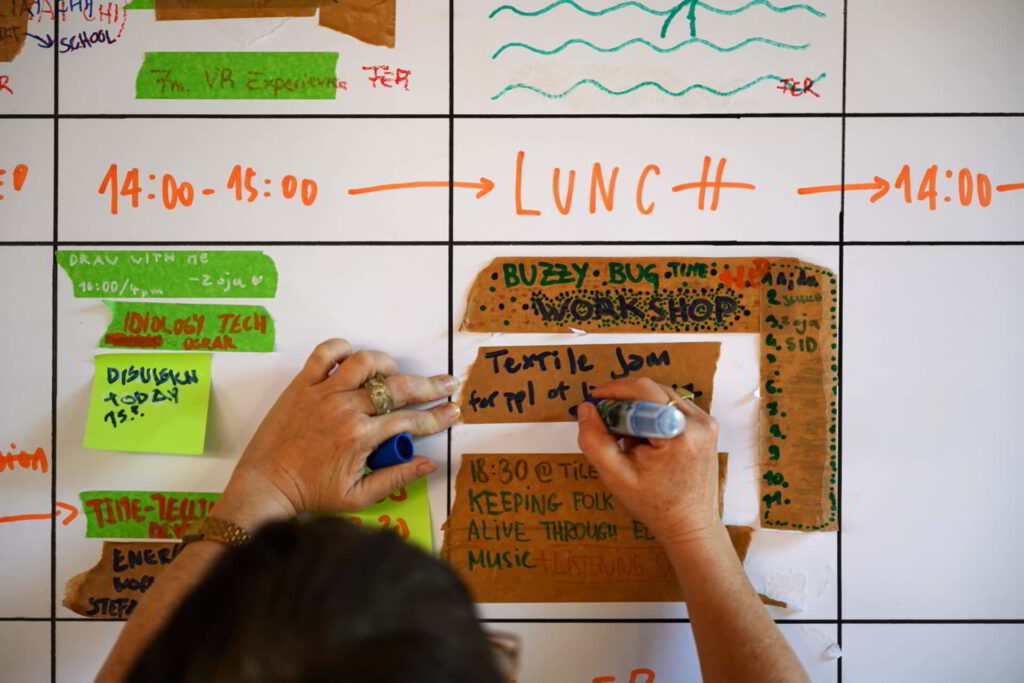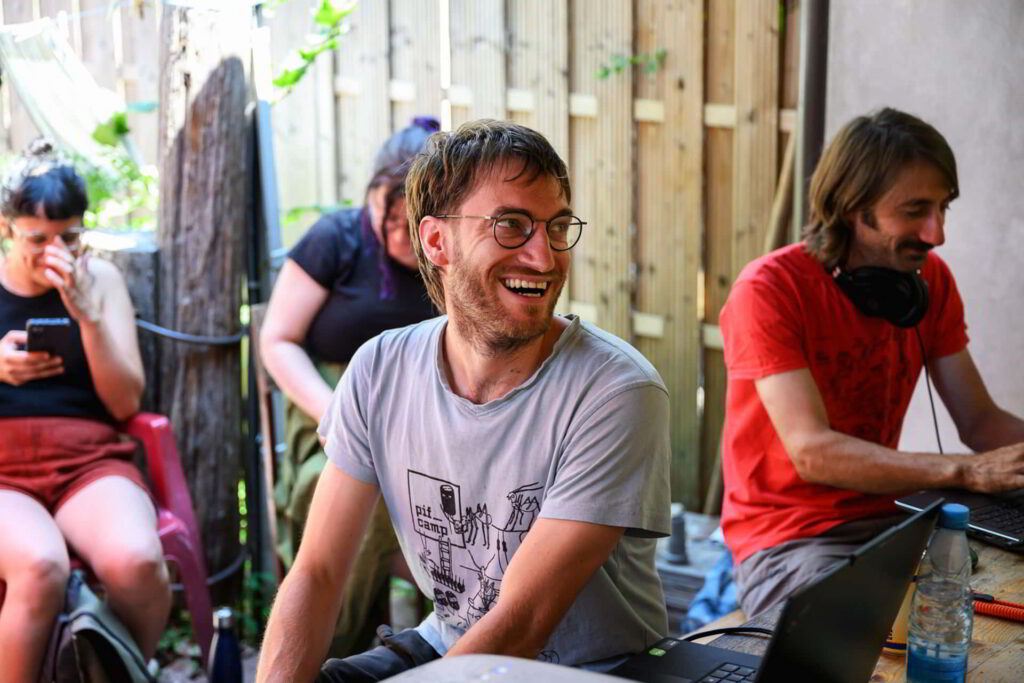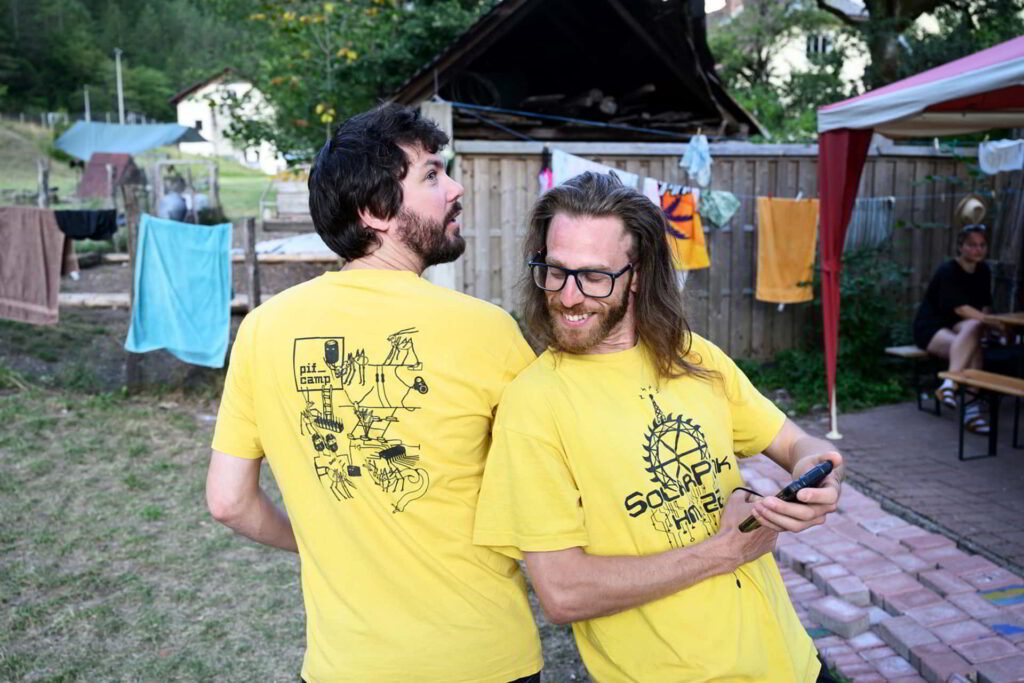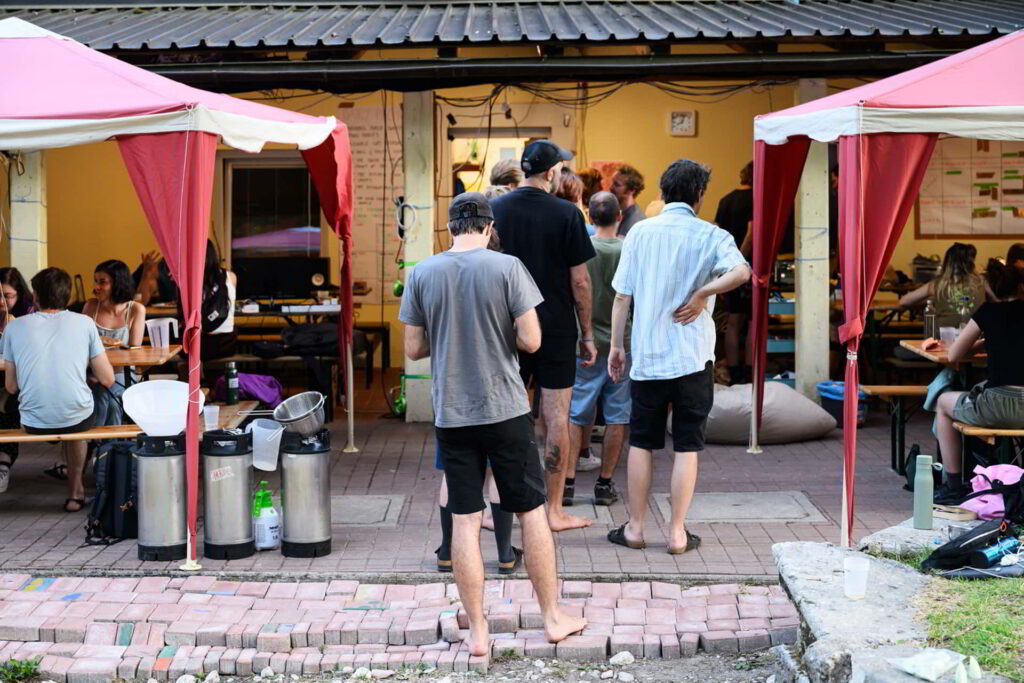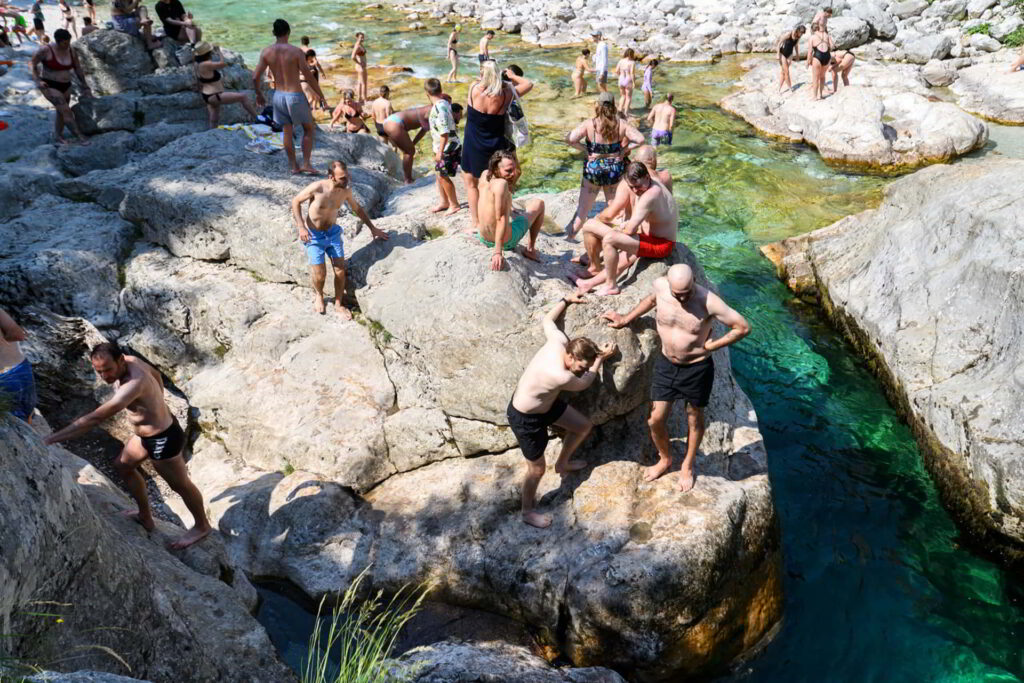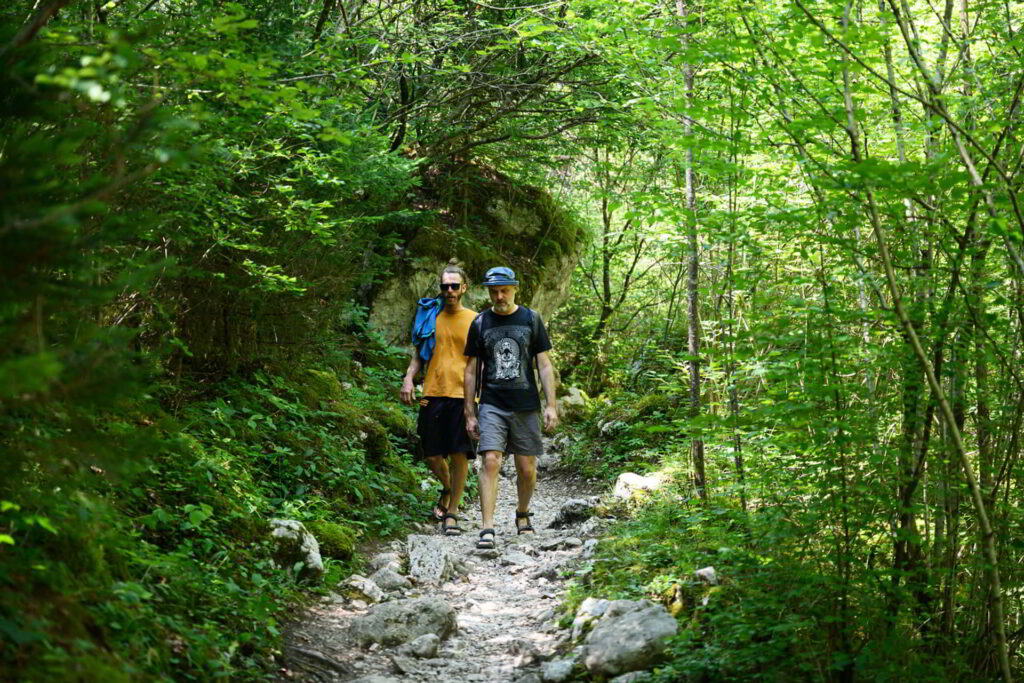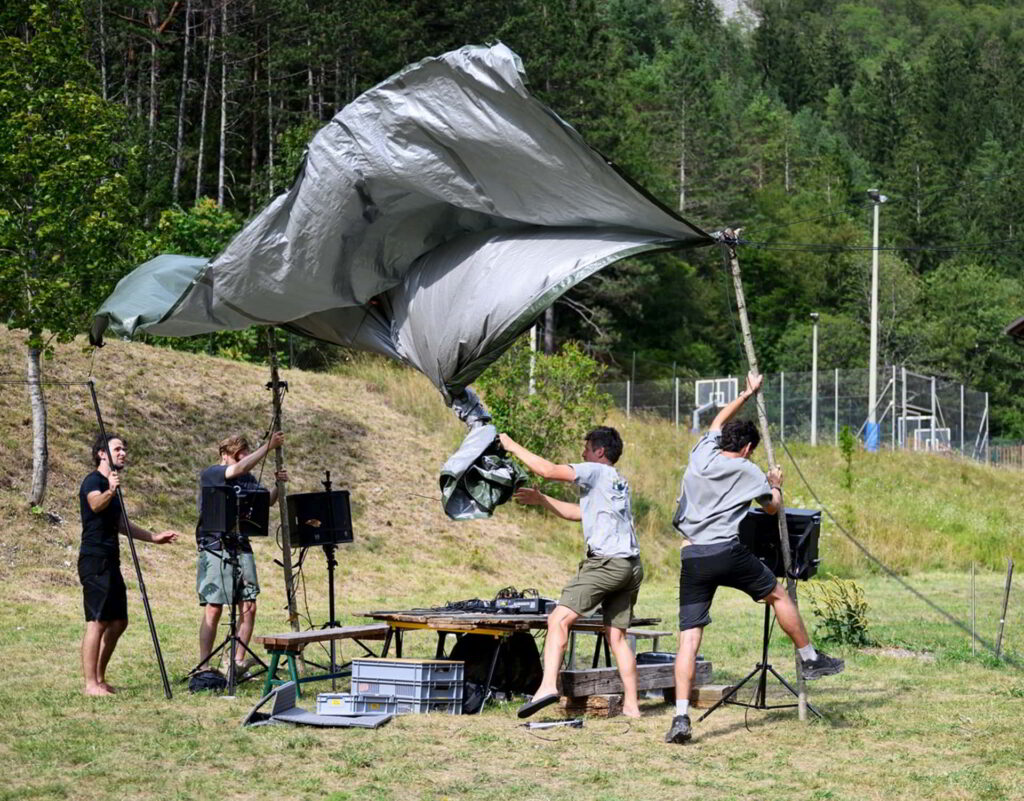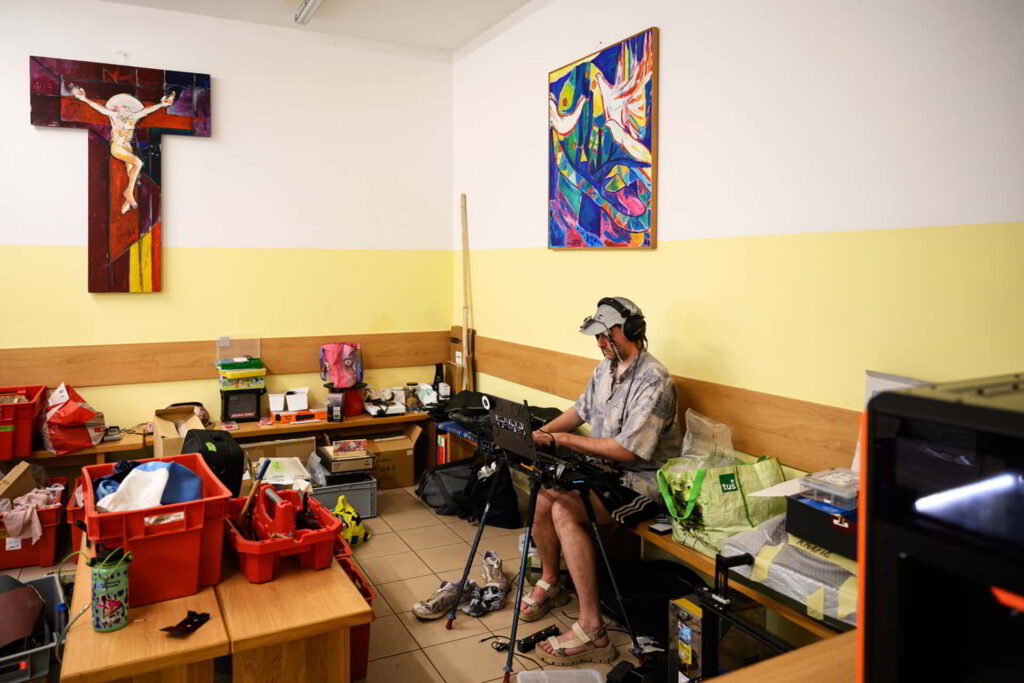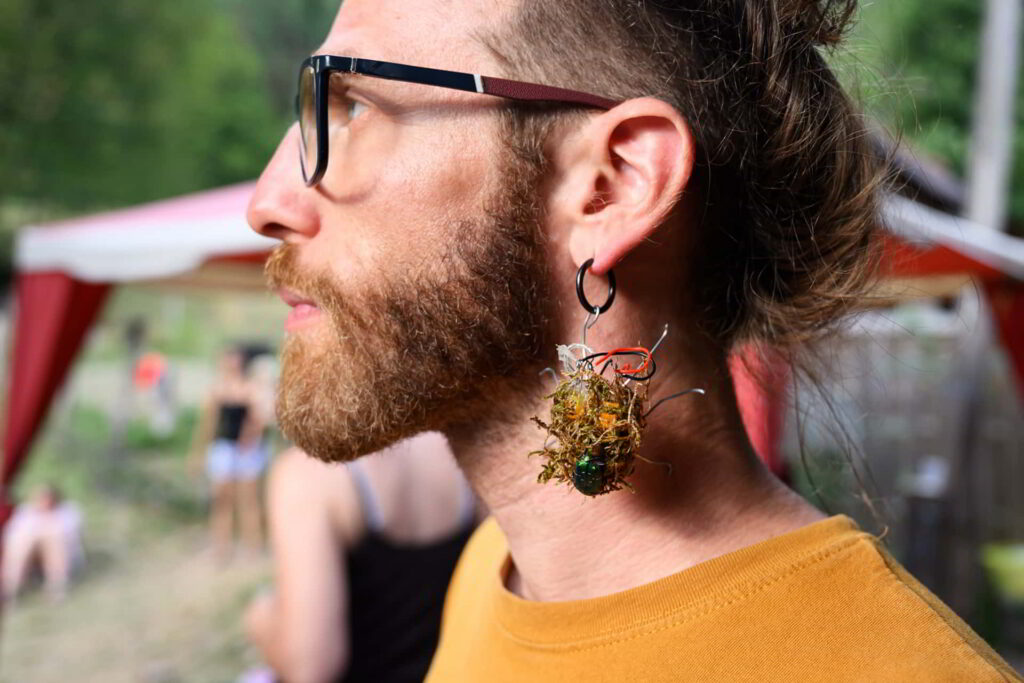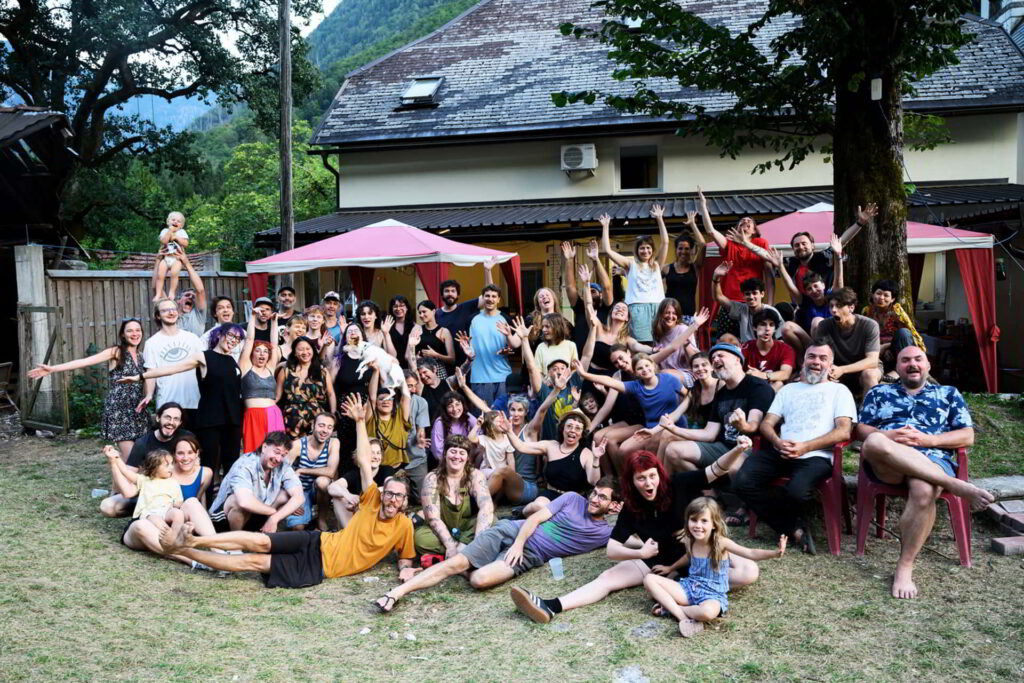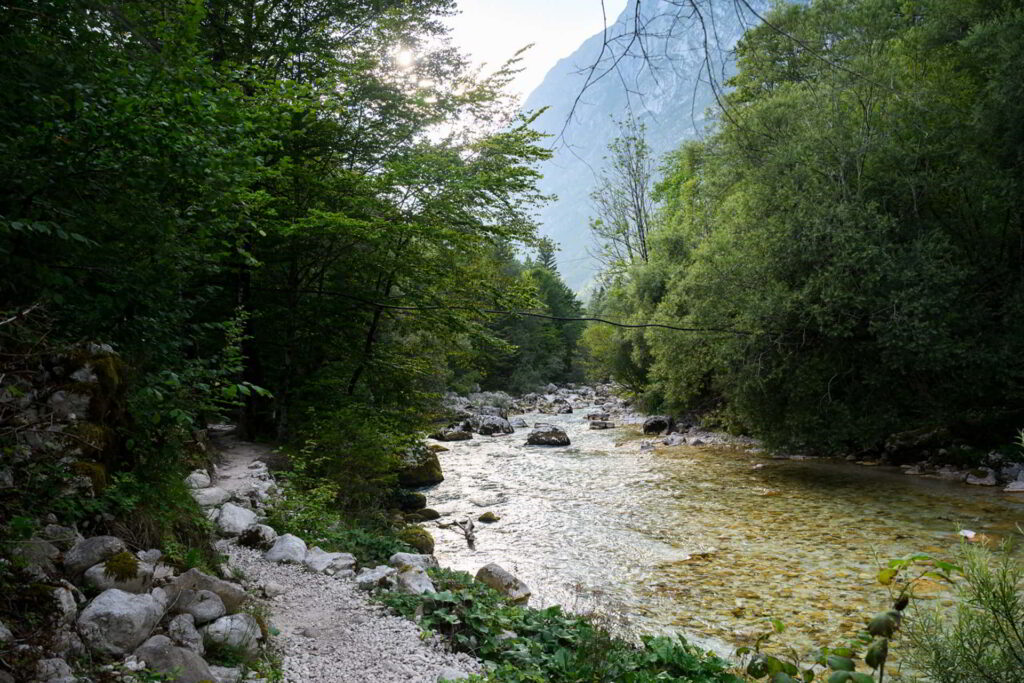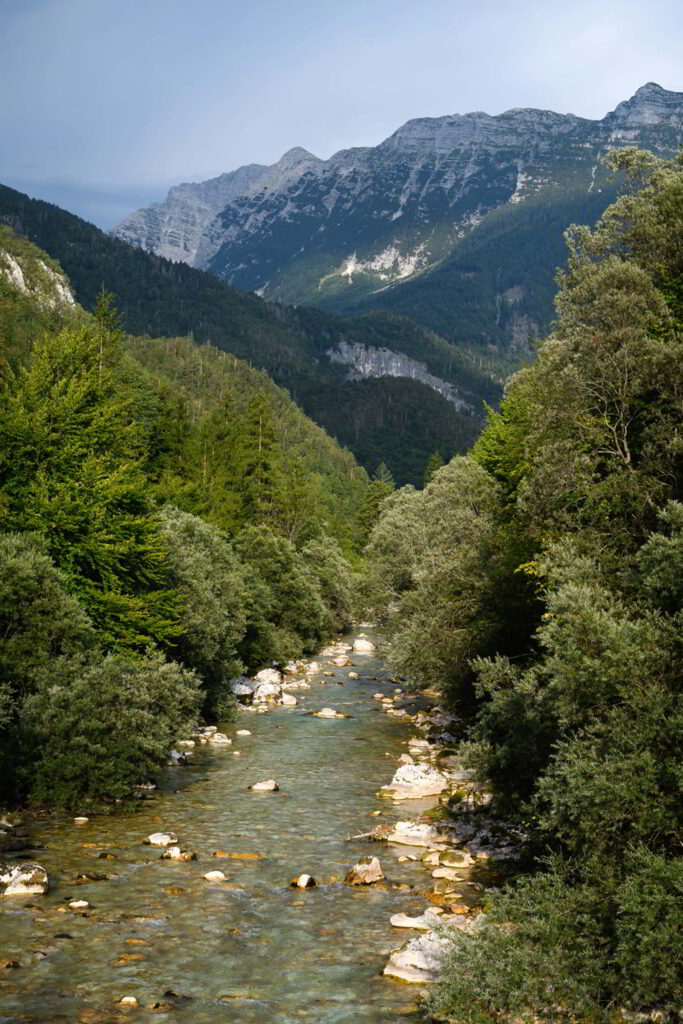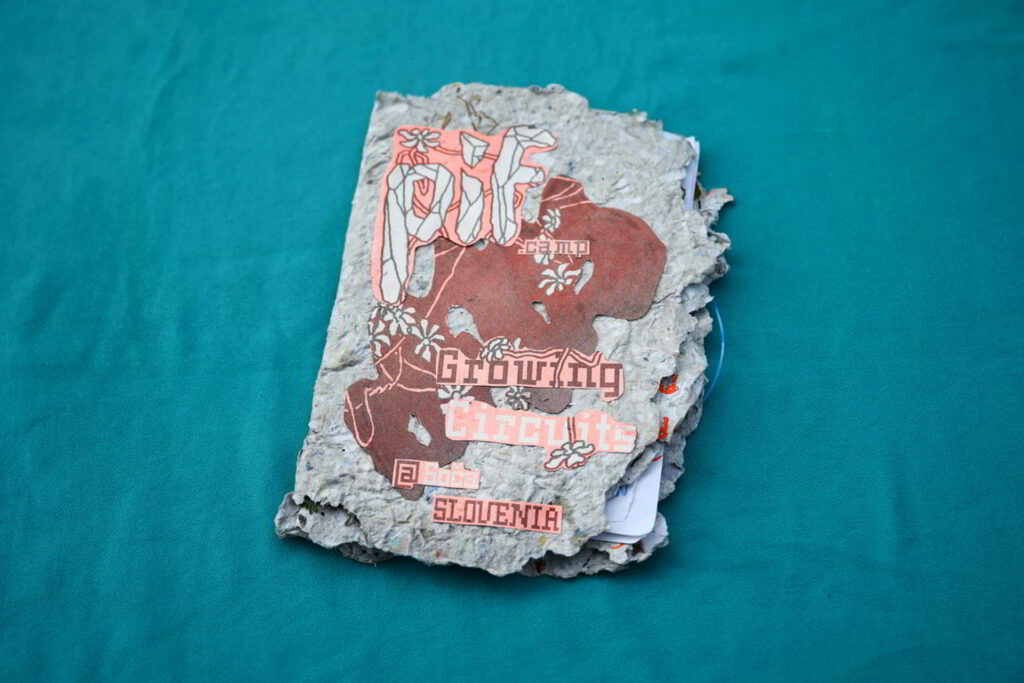
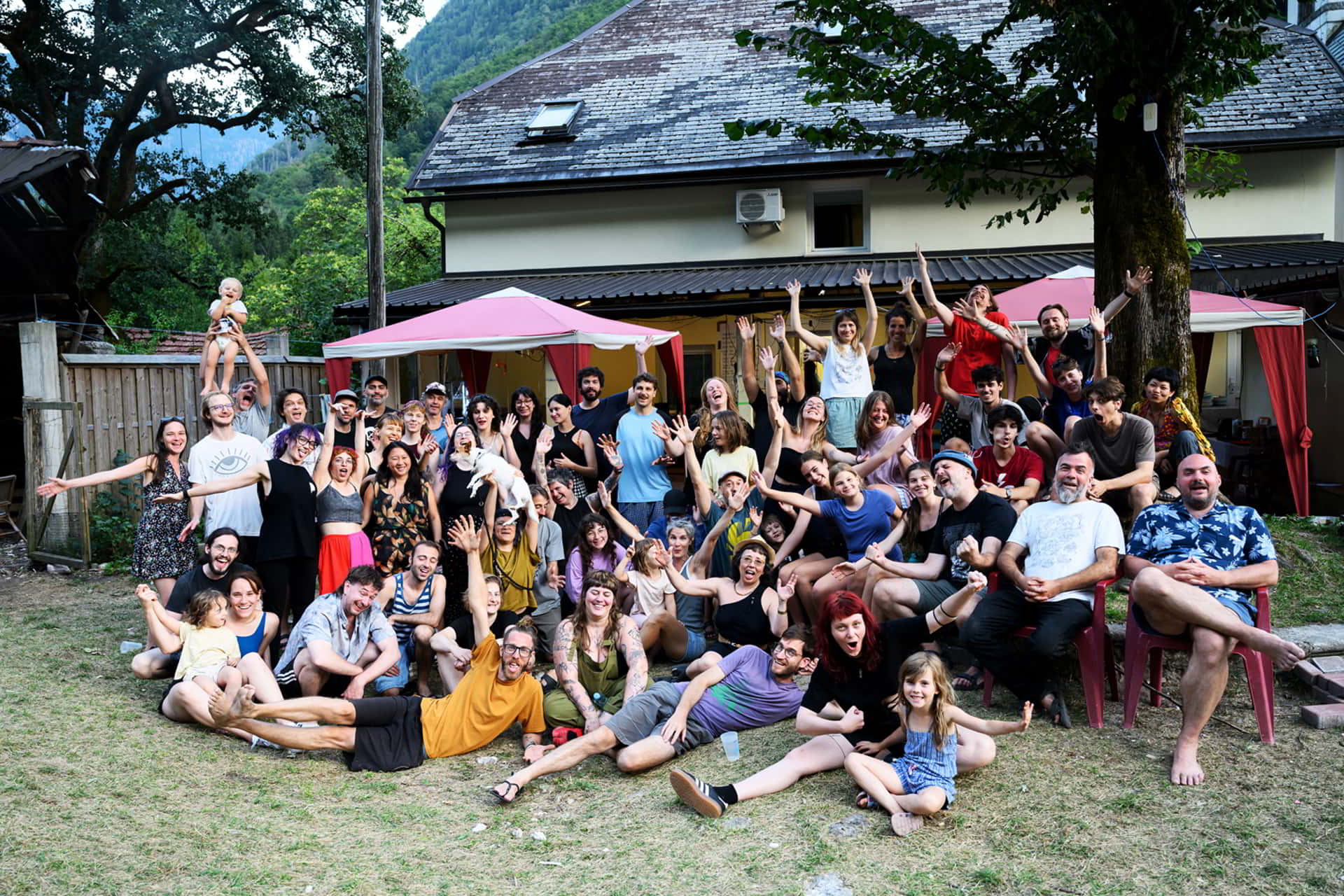
It is a couple of weeks now since we came back from the Slovenian Alps, after spending a week creating, sharing and enjoying PIFcamp. It is a camp that brings together more than fifty people —artists, makers, live coders, researchers— passionate about experimenting and sharing knowledge around art, nature, technology and music. All of it in a setting that is hard to forget: a valley between two great mountains, in the west of Slovenia, very close to the border with Italy, with the Soča river running through it in a blue that seems unreal.
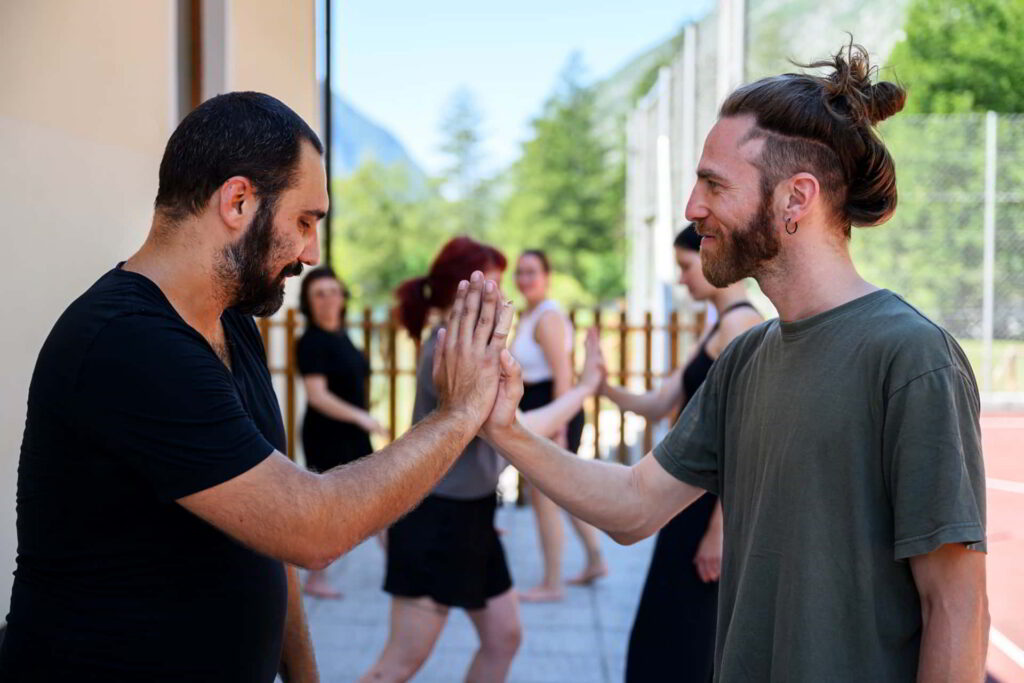
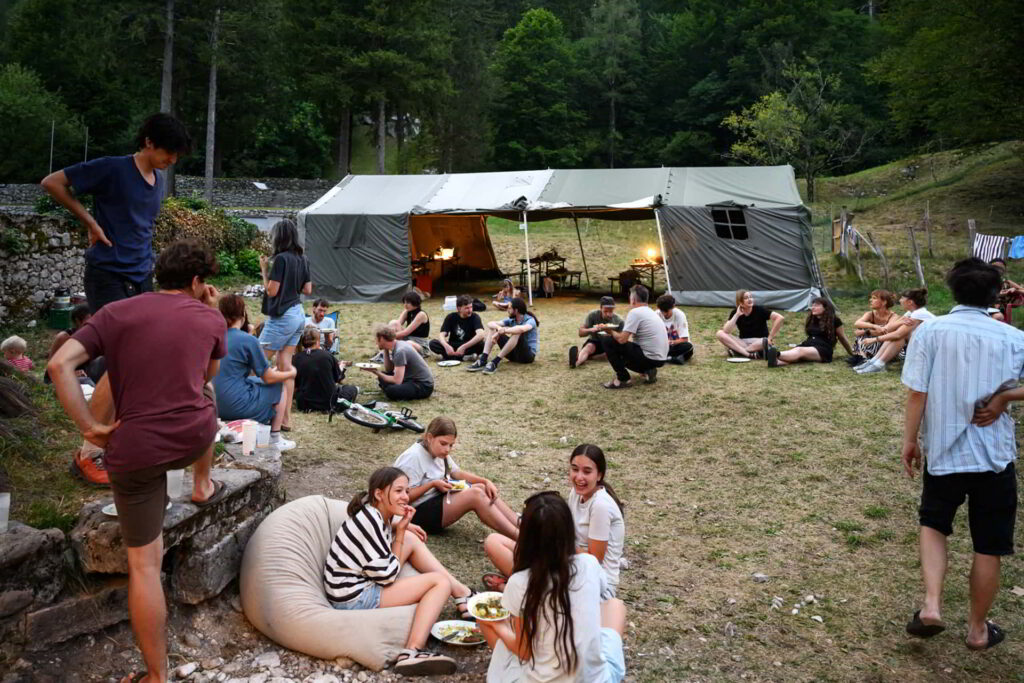
Each participant has those days to develop their project and, more interestingly, to co-create it or share it with the others. PIFcamp does not work as a festival of finished showcases. It is a week-long open-air laboratory, in which circuits are soldered both on the tables and between people.
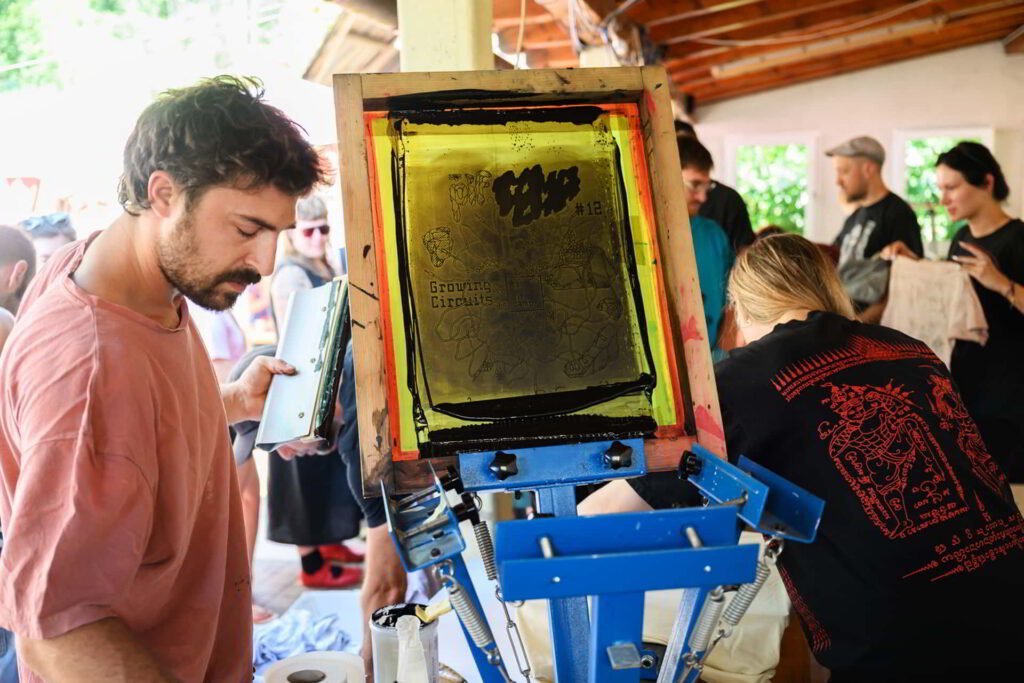
This year’s theme has been Growing Circuits. It fits with what happens there: devices are built, yes, but relationships, ideas and collaborations are also grown, and they go on growing long after people come down from the mountain.
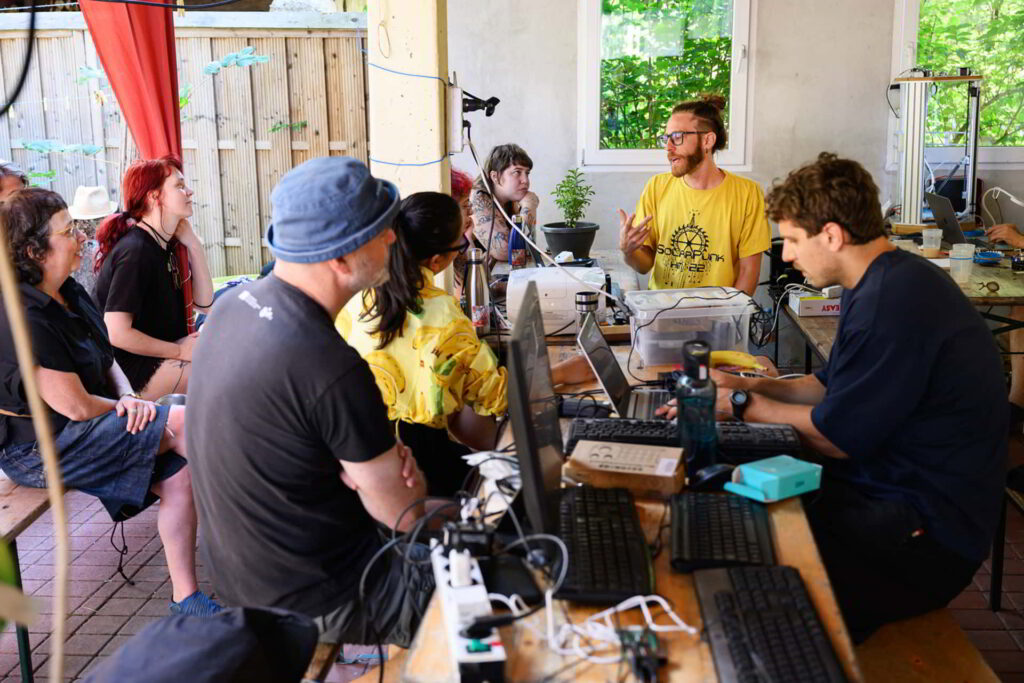
Biodata workshop
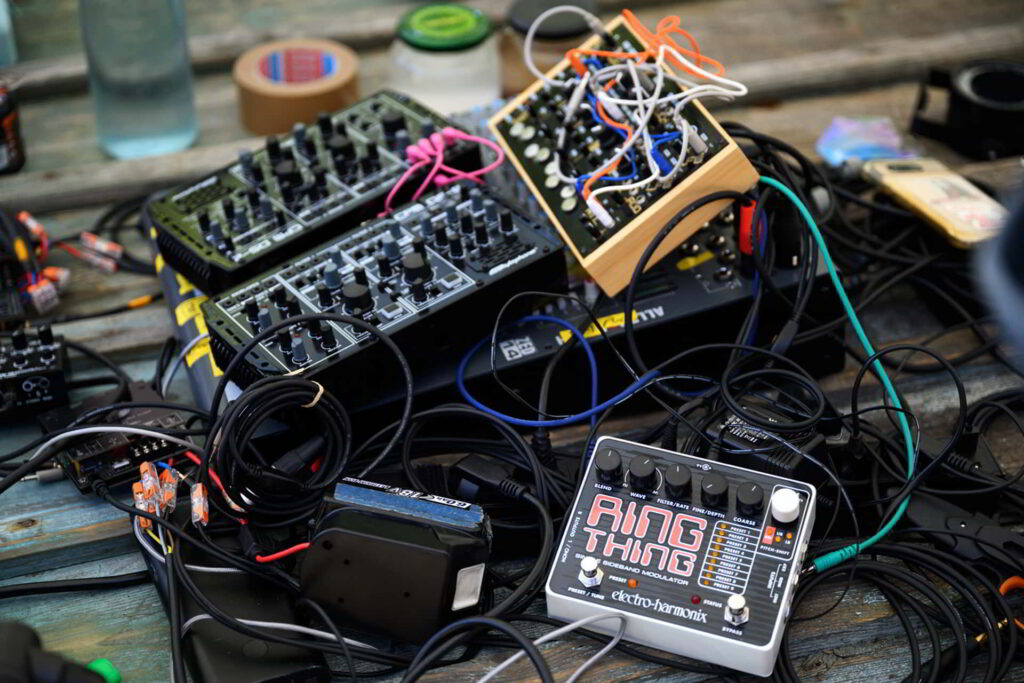
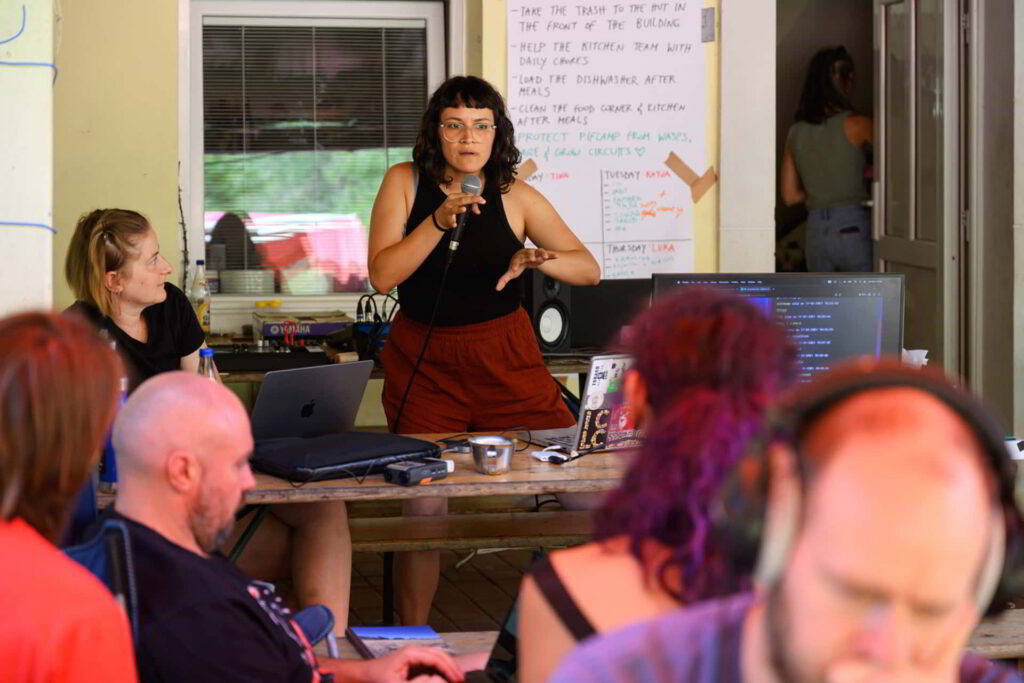
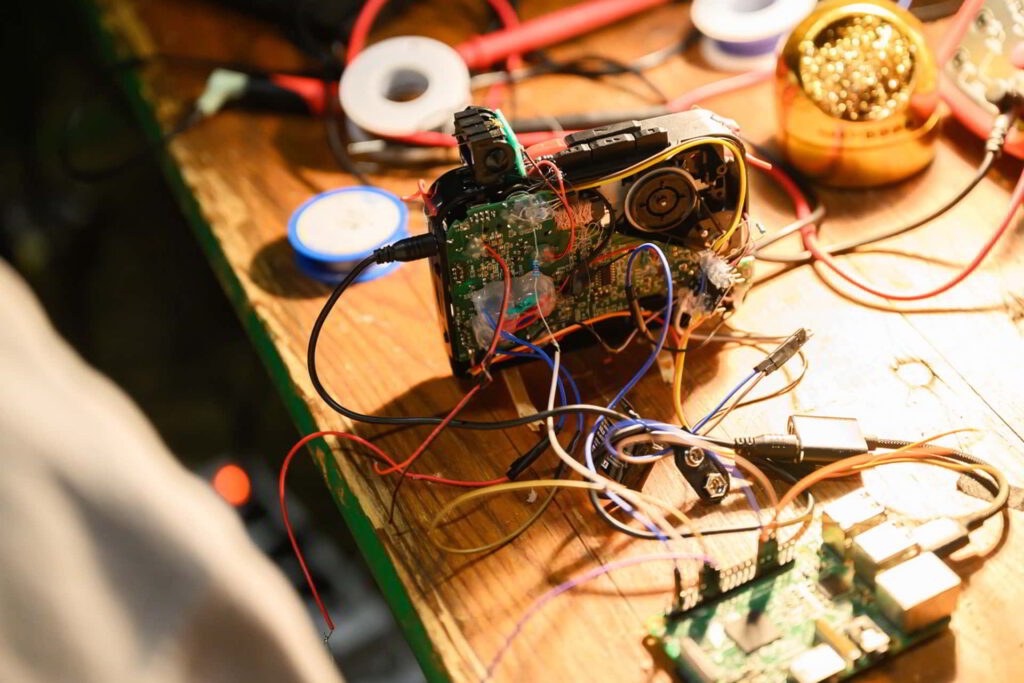
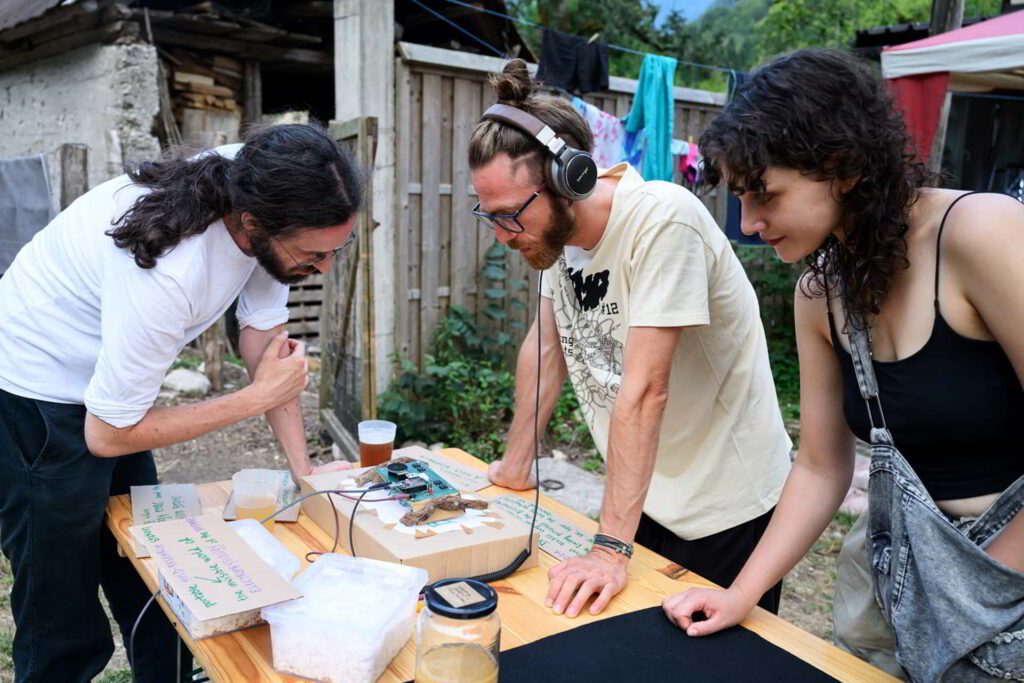
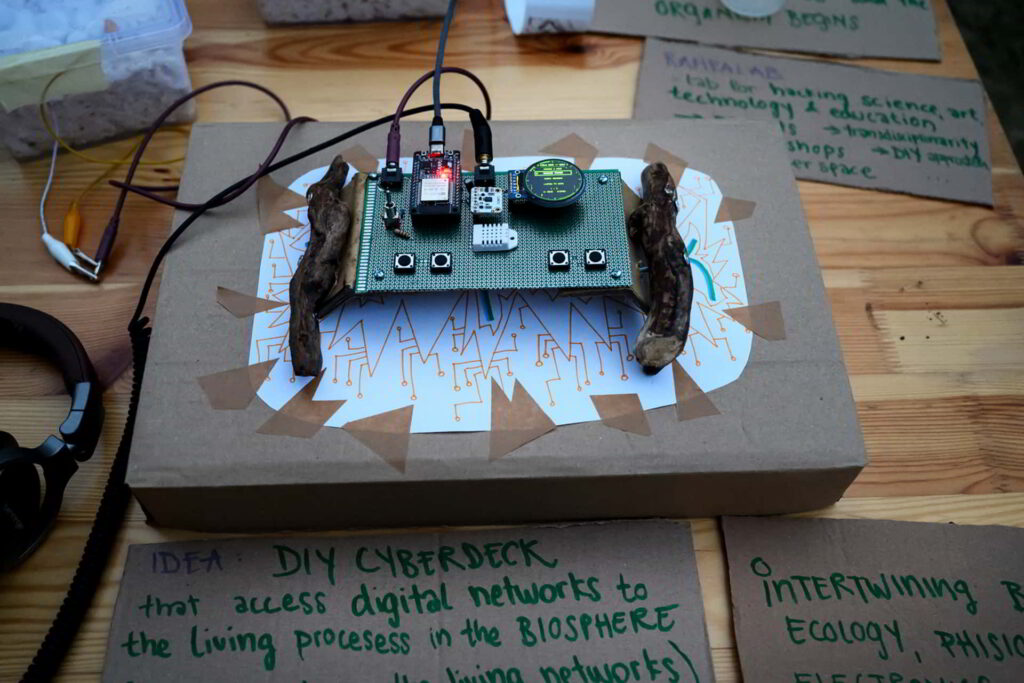
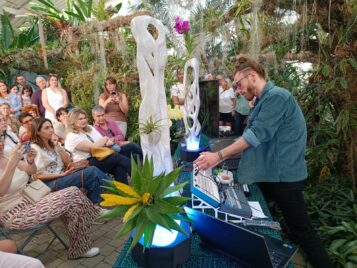
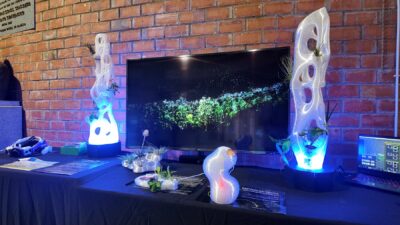
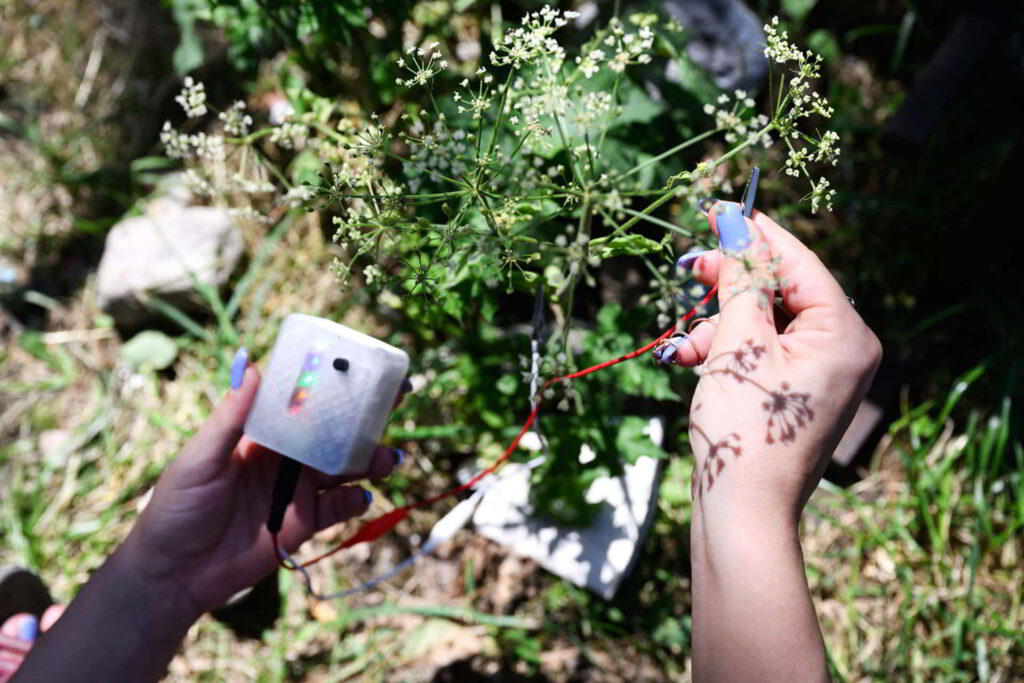
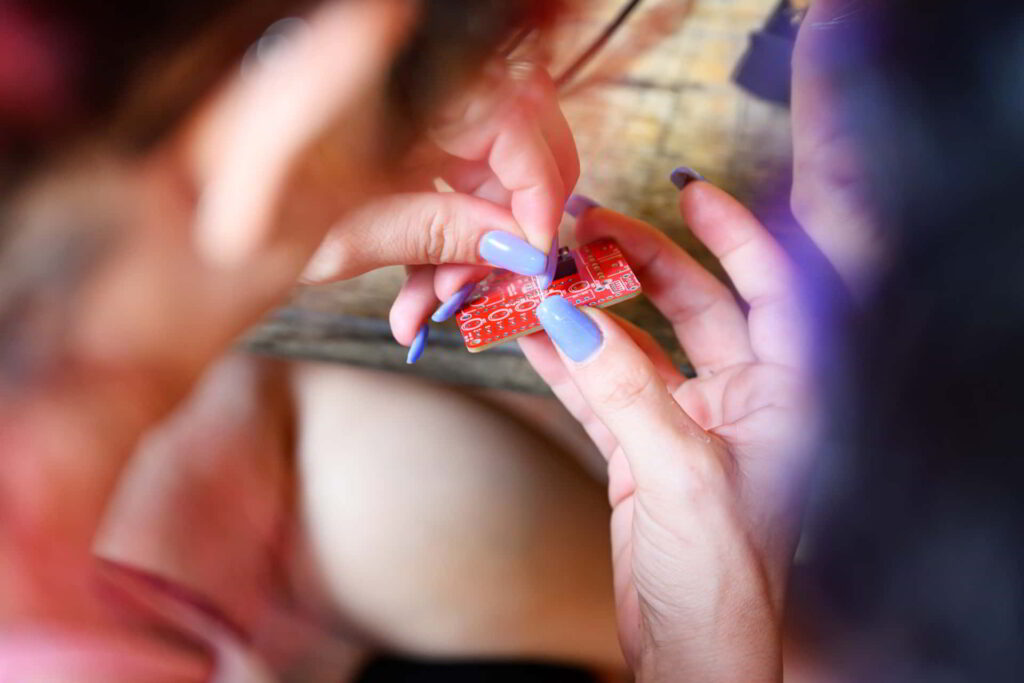
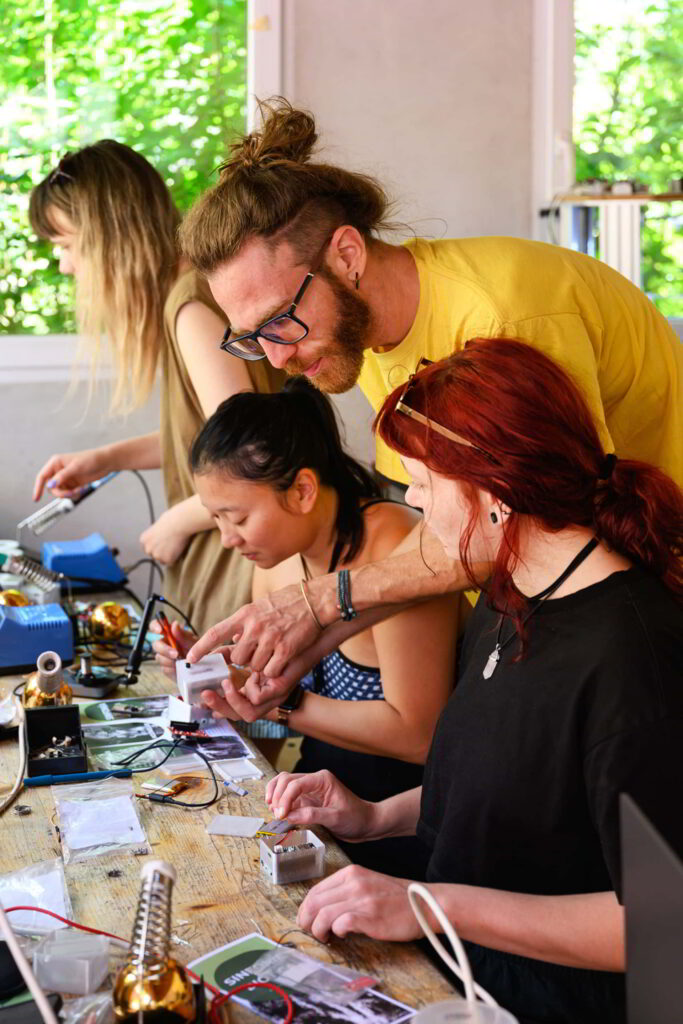
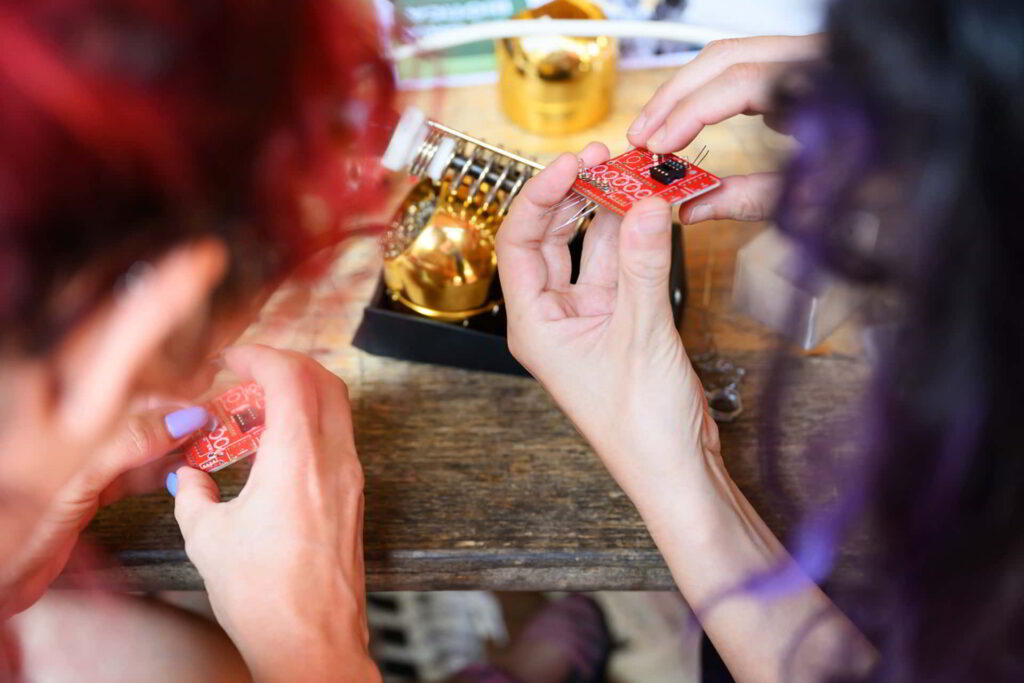
This year Fer, on behalf of MolinoLab and of the Sinfonía Biótica project, ran a workshop in which seven participants built themselves a biodata: a free hardware and software device that turns the electrical impulses of plants —and also of fungi or other organisms— into MIDI information in order to generate sounds or control visuals. It does not extract anything from them: it listens to electrical processes that are already taking place, subtle changes of conductivity caused by light, water or touch.
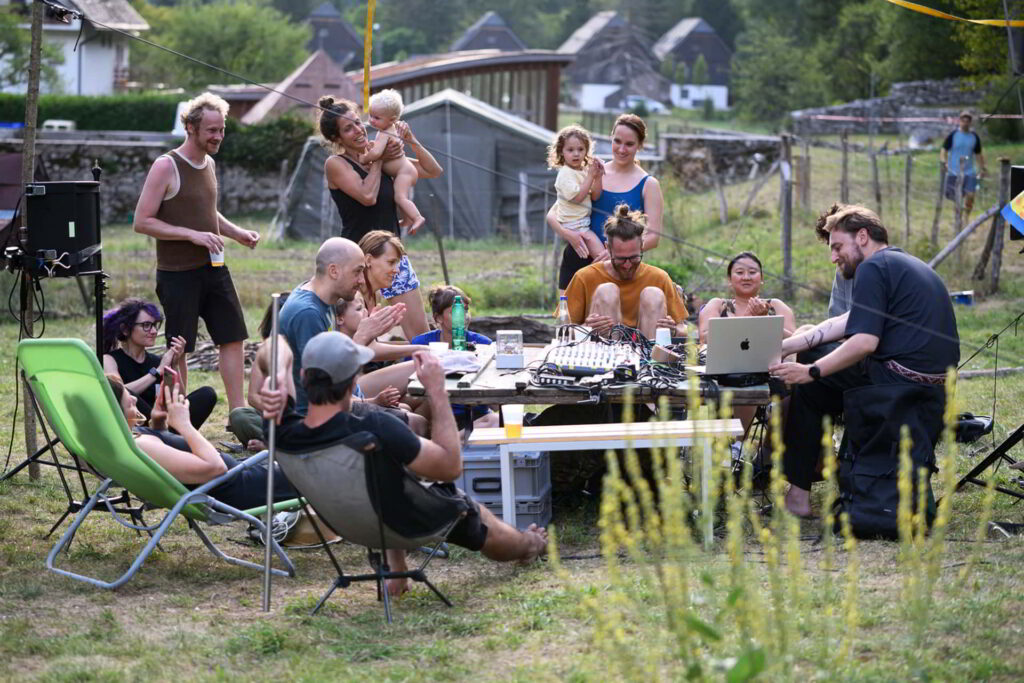
To solder, to try things out, to connect electrodes to different plants and to listen to how each one generates its own melody. At the end of the session, each person took their working device away with them. And, as often happens at PIFcamp, the workshop did not stay in the workshop: Dima used one of those sensors in his performance at the BergCamp, together with recordings captured through the valley. Once sown, the circuits go on growing.
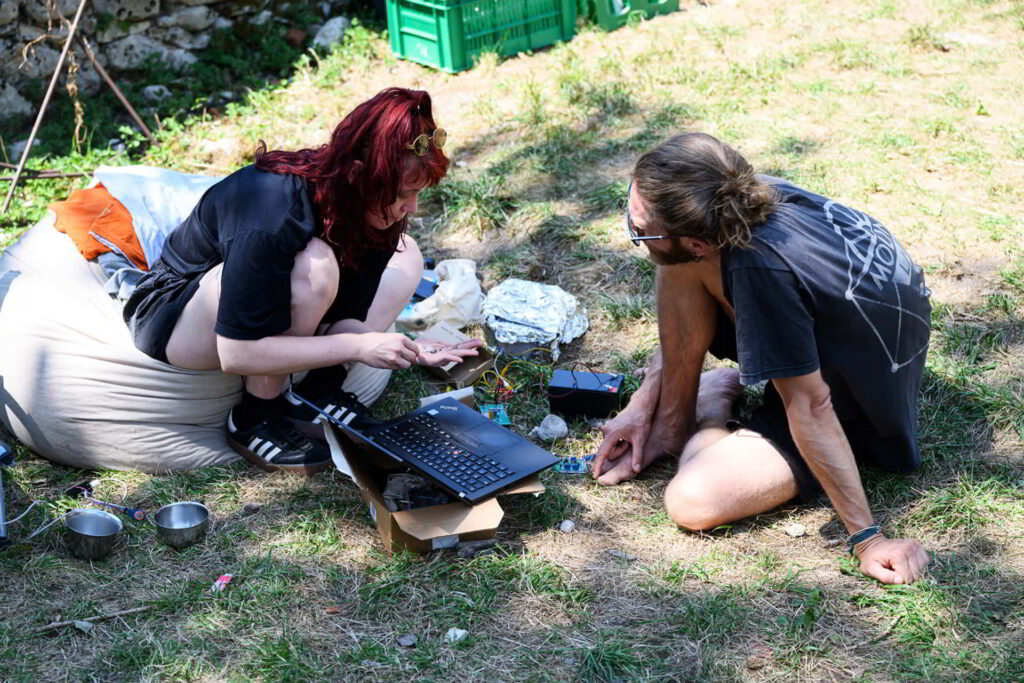
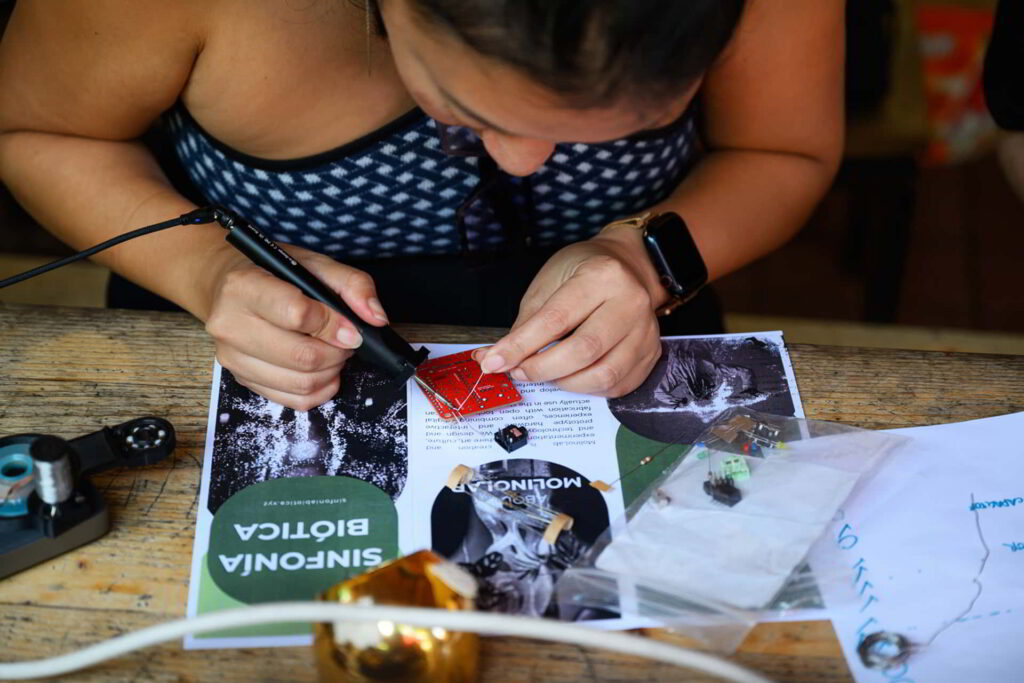
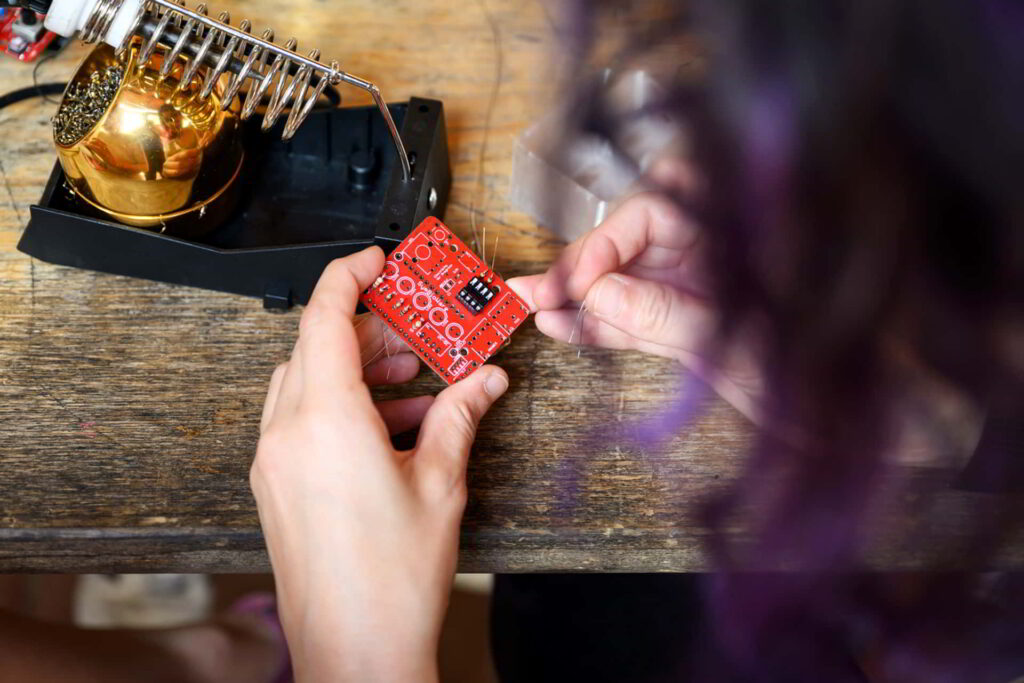
A great discovery has been getting to know part of the Axolot.cat team, based in Barcelona: Citlali, Roger, Andrés and their little dog Chupilca del Diablo, who stole the heart of half the camp.
A great pleasure to share the trip with my little sister Moira. During this year’s InteractivasFest I told her about the camp and she was finally able to come. Together we closed the PifHain on the closing Sunday.
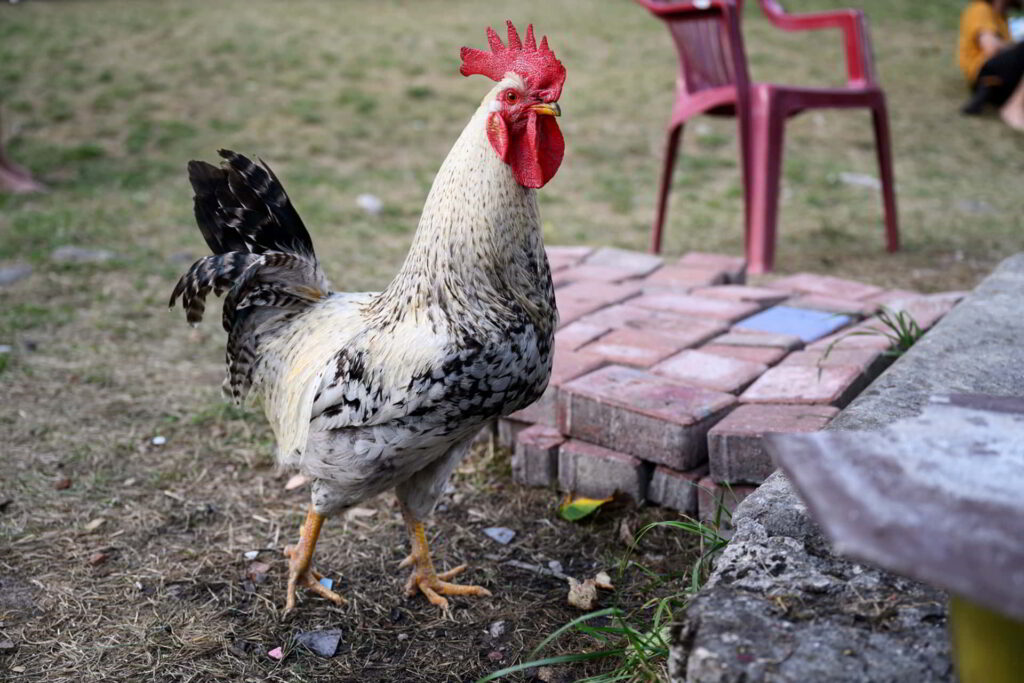
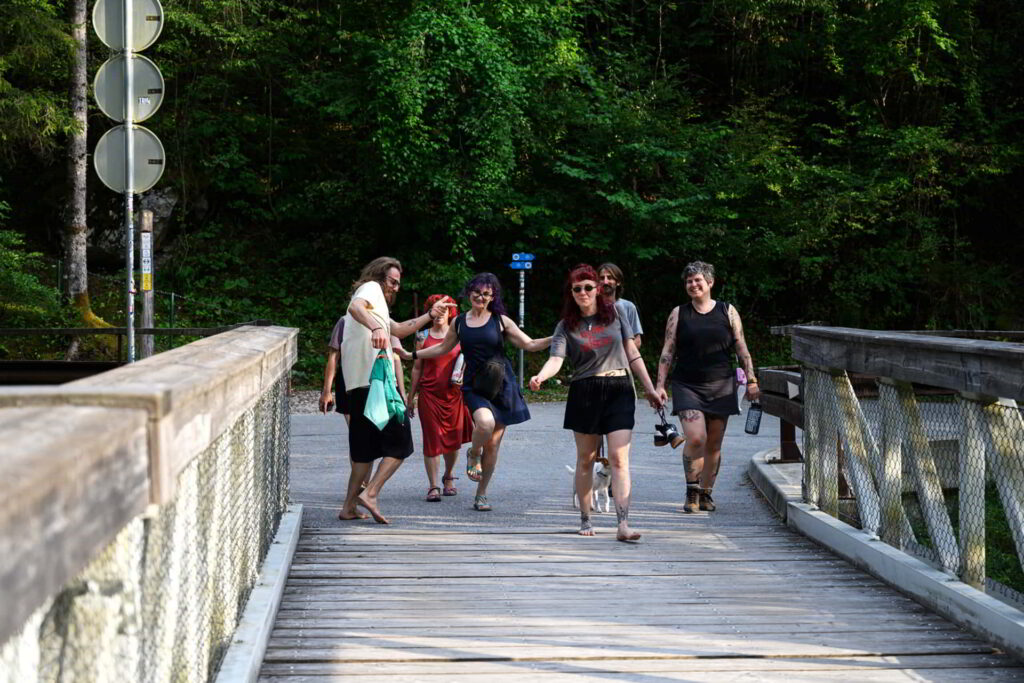
PIFcamp also has its non-human campers: hens that wander the site, two cats, and wasps with which we had to negotiate the space. The Soča valley imposes its own microclimate, and the camp ends up generating another, social one: wild and at the same time safe, with room for whoever needs to talk and for whoever needs to be quiet for a while by the river.
Open Saturday
Open Saturday is the day that best defines what PIF is. In the morning the last touches are put to the projects… or people rehearse the short explanation of why they are not quite finished yet. A large part of what is born here goes on growing long after the physical gathering.
The day is divided into three parts: the daytime programme, the BergCamp and the PifHain.
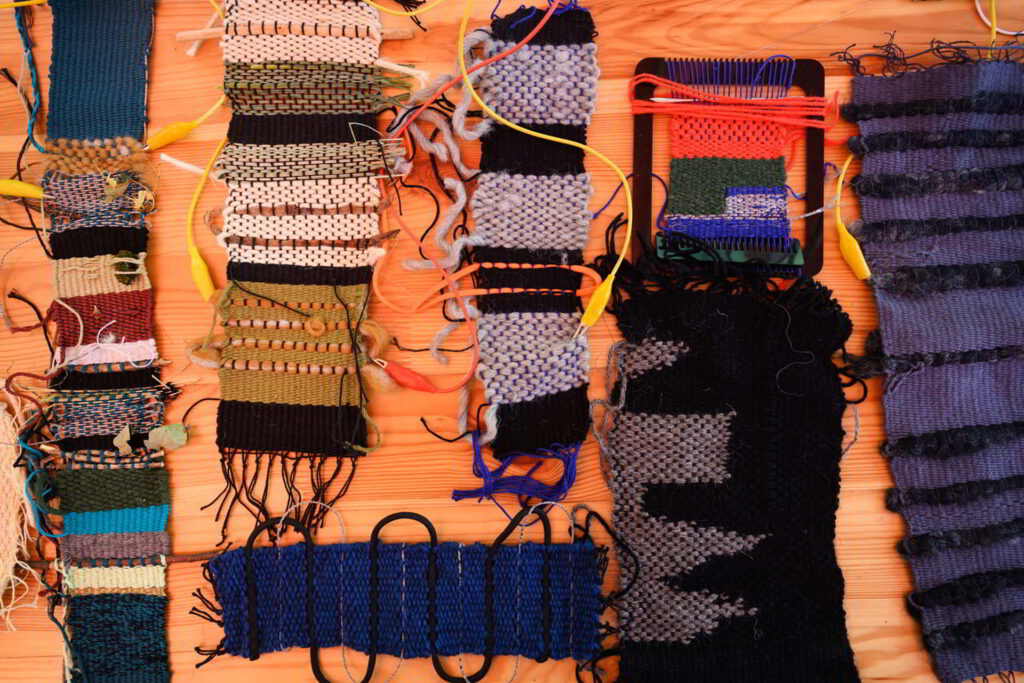
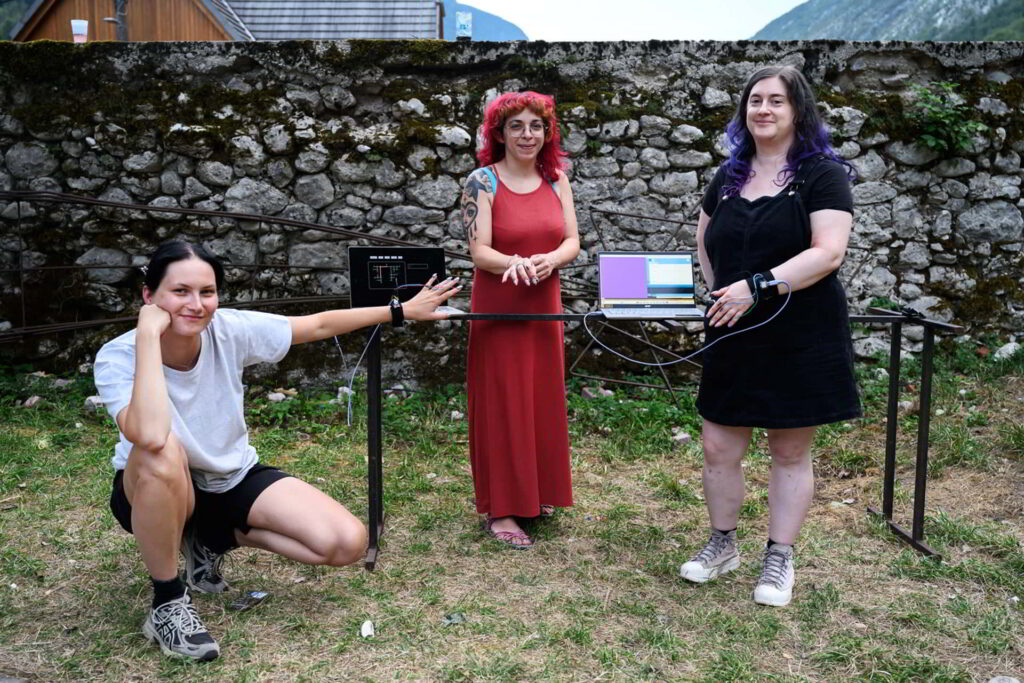
During the day, the projects spread out over tables, courtyards and riverbanks. Karolina took us through her self-defence workshop, which ended in embroideries of poisonous plants with thread dyed by those same plants: suddenly, embroidery did not feel so far from soldering. Dasha laid out a table of poetry written in the style of Dr. Seuss by different participants, with a crocheted thneed —a data centre in wool— in the centre. Next to it, Zoe’s weavings, made in pairs on tension looms, with conductive wool hooked up to microcontrollers and a loudspeaker: they could be played as an instrument. This year textiles had a special presence, and added an unexpected layer to the dynamic of the camp.
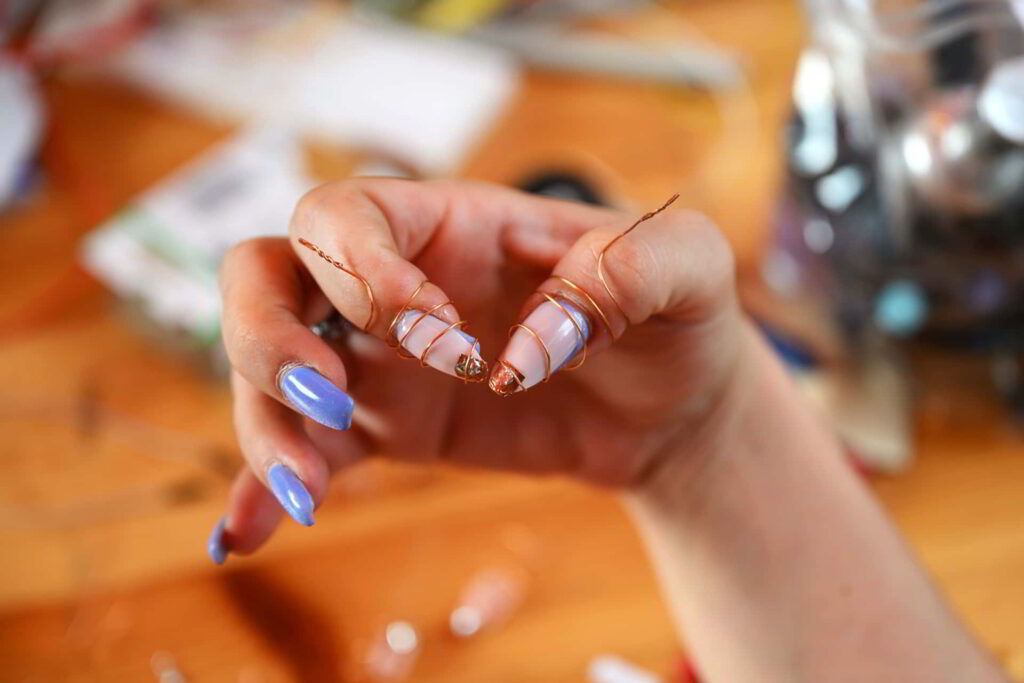
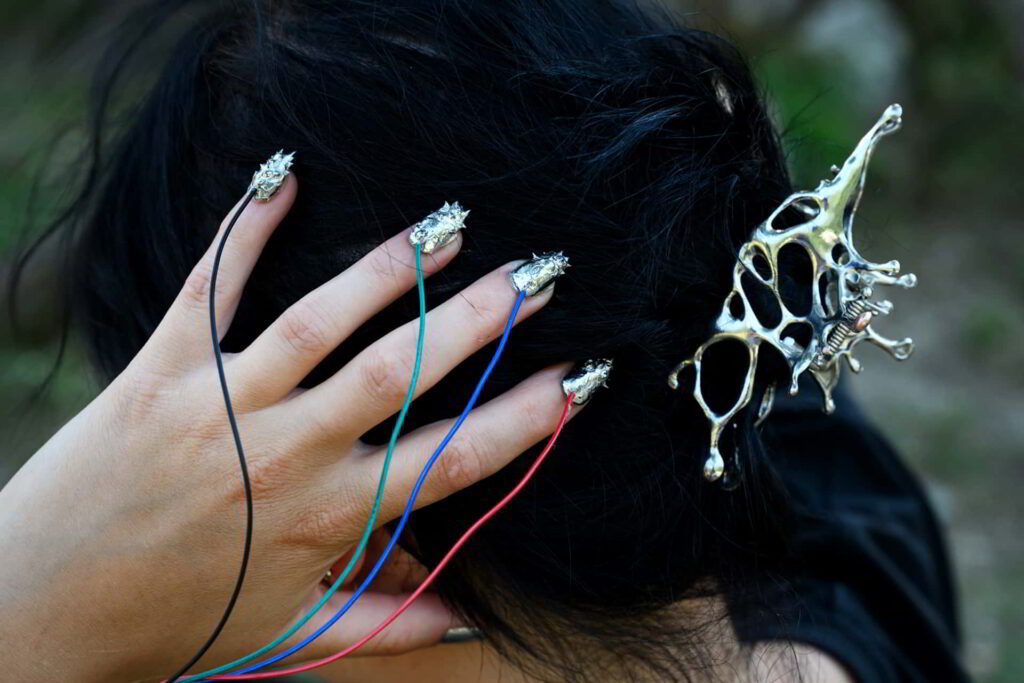
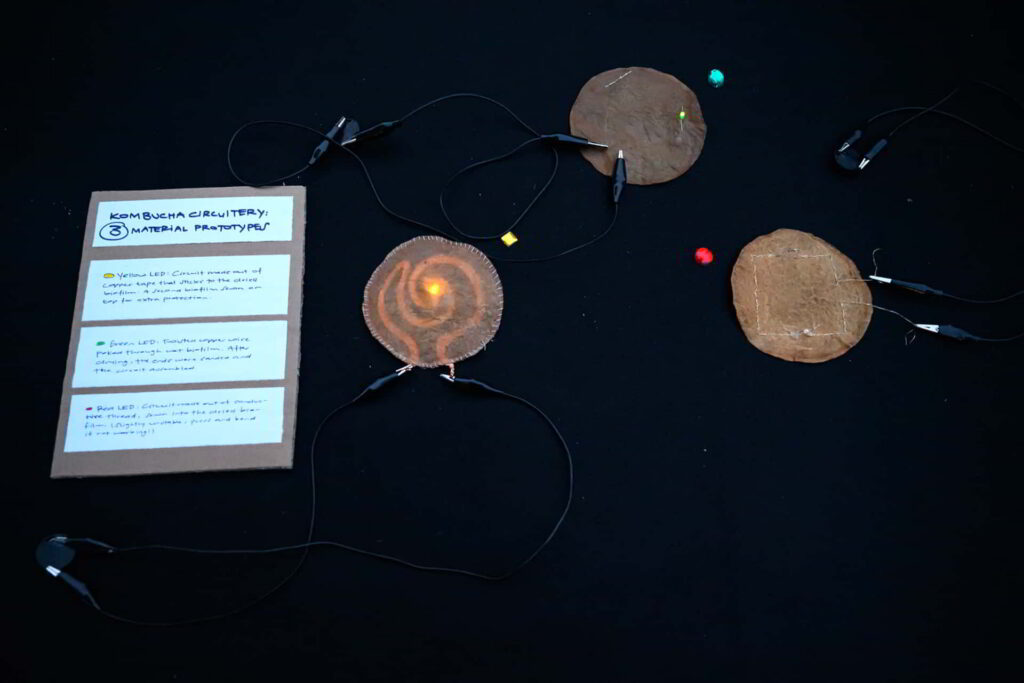
There was also Nastja and Jakob’s mycelium cyberdeck prototype, Lea’s SCOBY samples with copper, button cells and LEDs, and Maša, Marisa and hitting every surface with the nails they had just soldered.
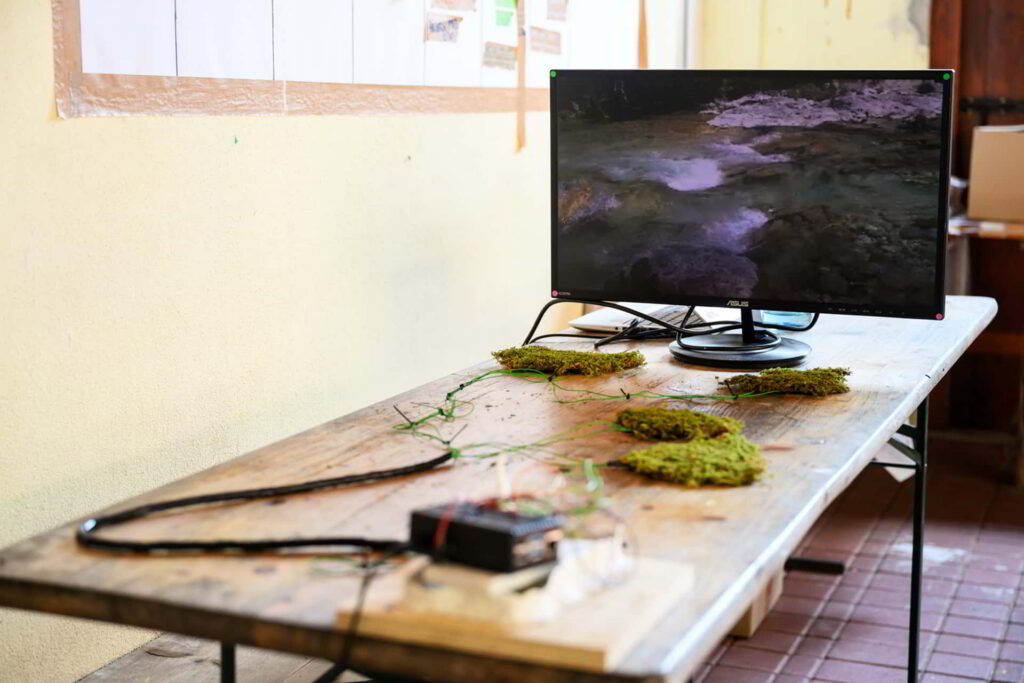
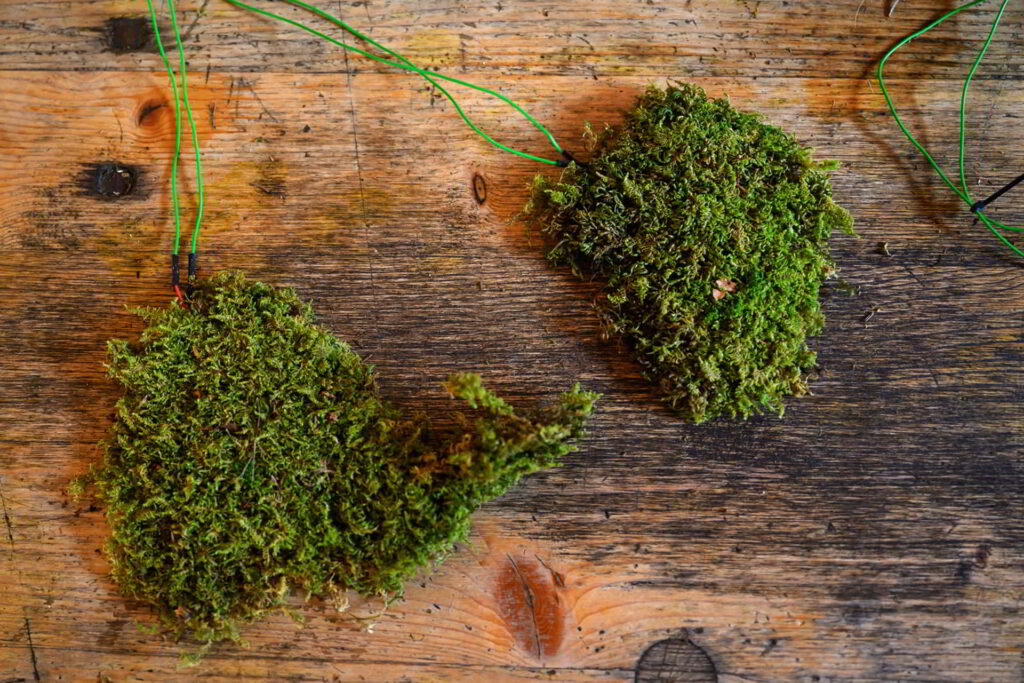
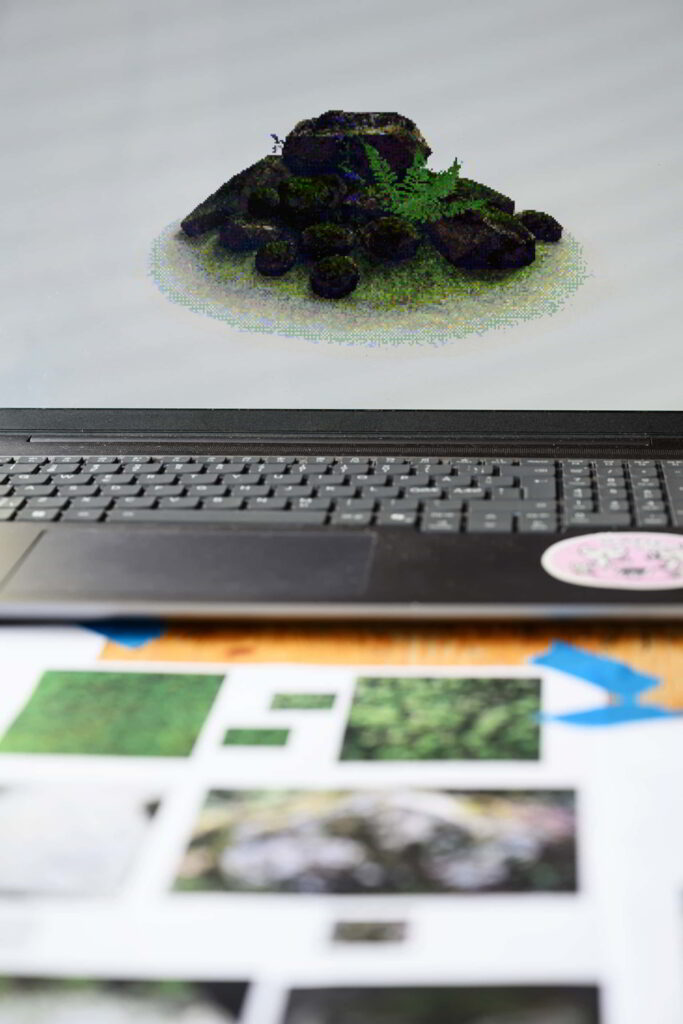
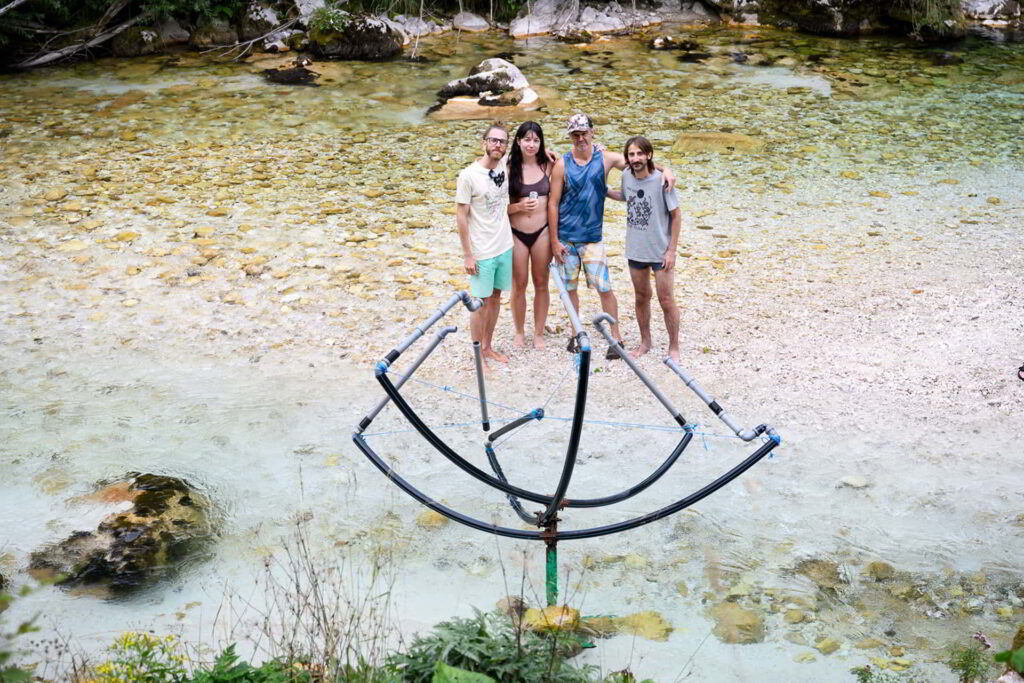
The river appears in so many projects. Freyja brought out a laptop with samples of rock from the Soča; Aleksander, a screen with the water and vibrant moss to hold. Libi was emitting a radio signal with sounds of the river, powered by a battery charged by the stream itself. If you went closer to swim, you could hear Tamara and Jani’s river organ, pushed by the currents, calling to anyone who passed by.
BergCamp and PifHain
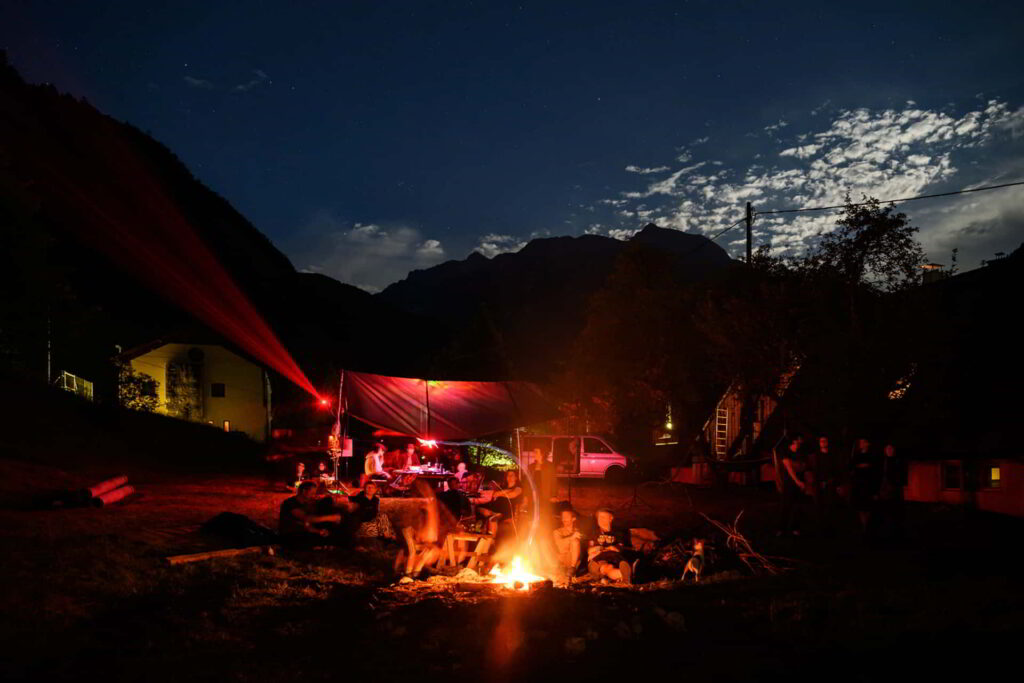
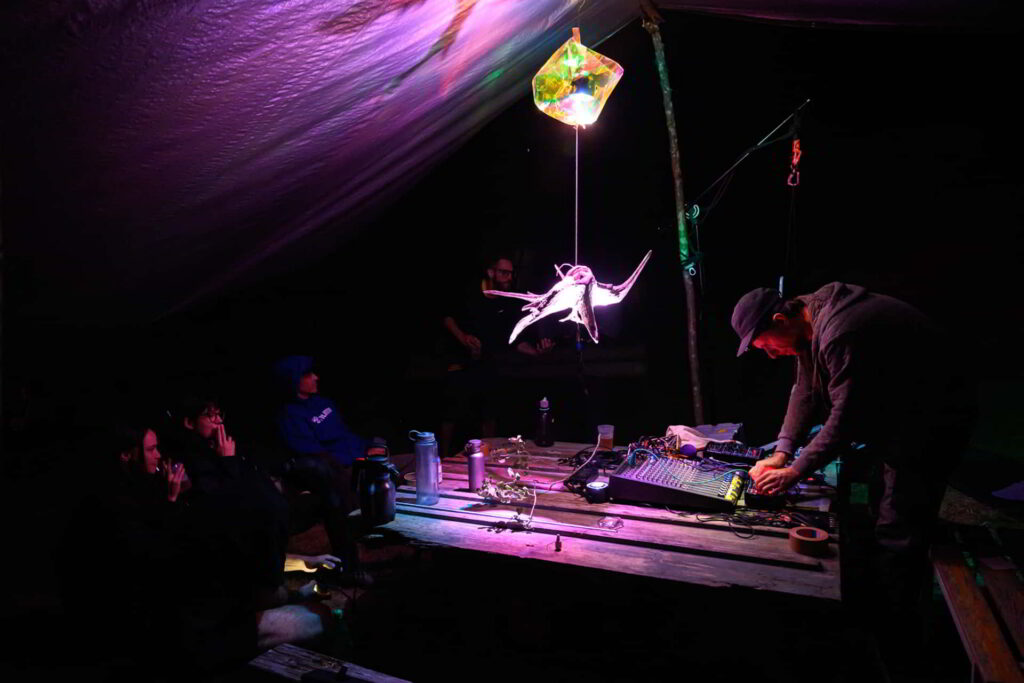
At dusk, the BergCamp starts on the basketball court behind the school. Jakob and Matjaž, Dima and the plant, Fer and Omar, Bernhard, Toyota Vangelis, CMAR #1 and Blaž performed, each with projects developed during the week. Jakob and Matjaž used four cassette players modified in a thousand ways to record and play back the sounds of the surroundings.
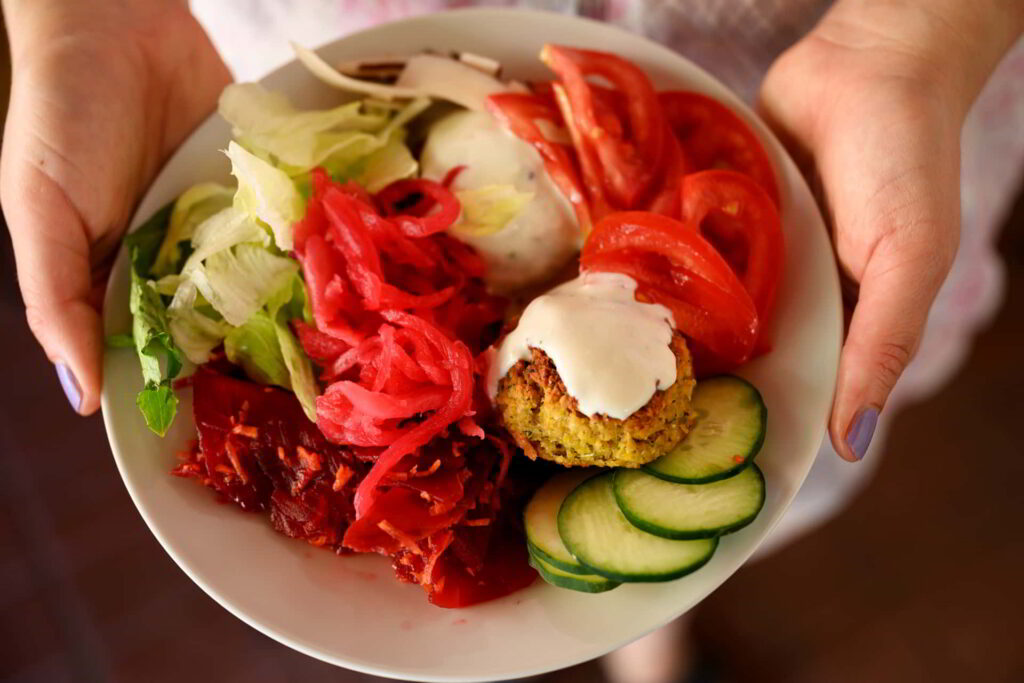
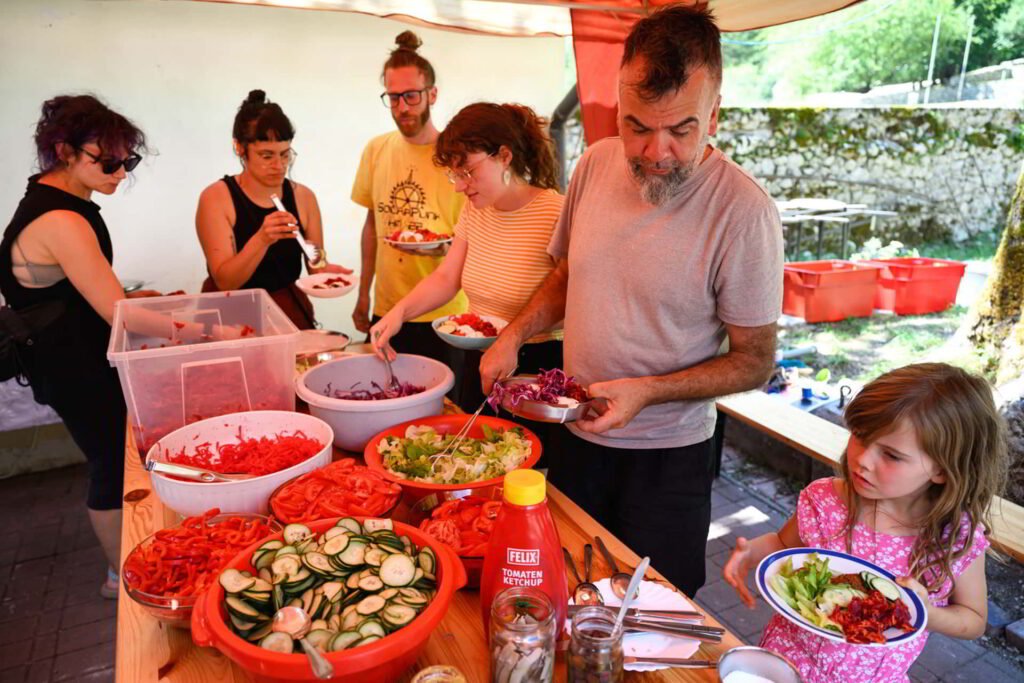
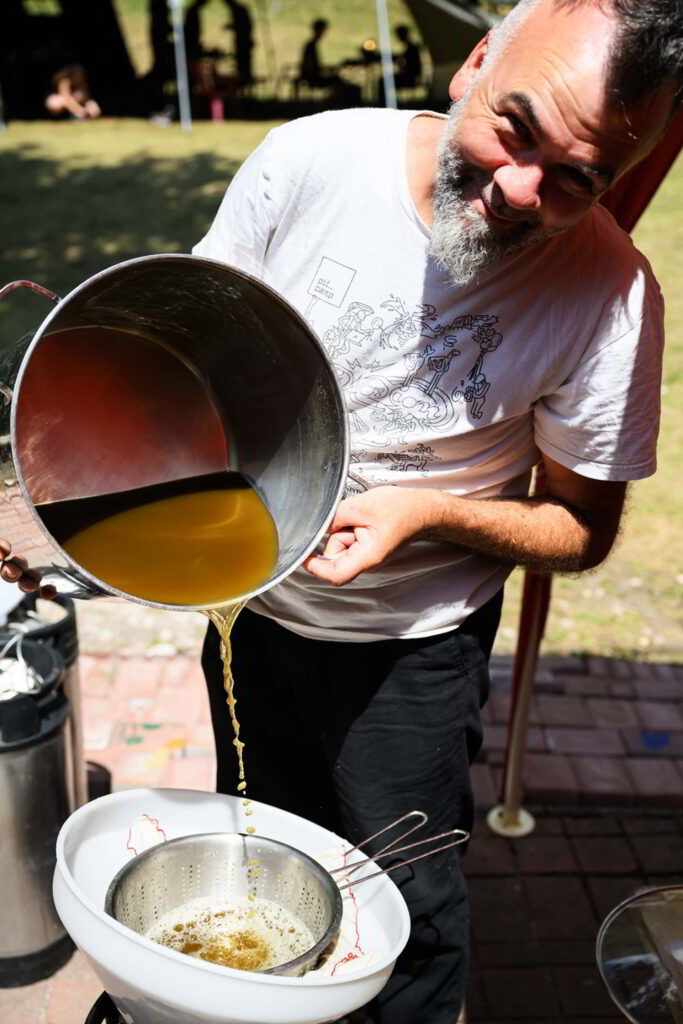
That night dinner is whatever is left and whatever the kitchen is still bringing out. It has to be said: Živa and Matija, Aja, Nina and Ahac looked after us with extraordinary food. Later a banana-cake tin appeared, the perfect prize between sets.
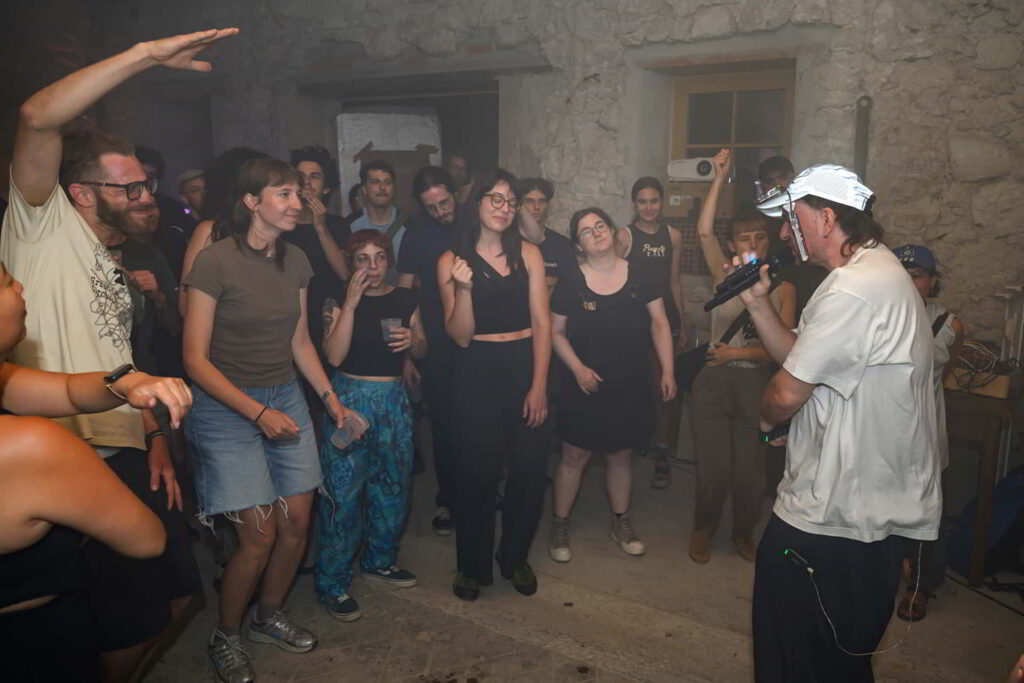
The PifHain is held in the barn of Neža’s farm. Security is strict: the PIFkids control the door. If you are on the list, a green dot on the wrist. There are rumours of a VIP pin.
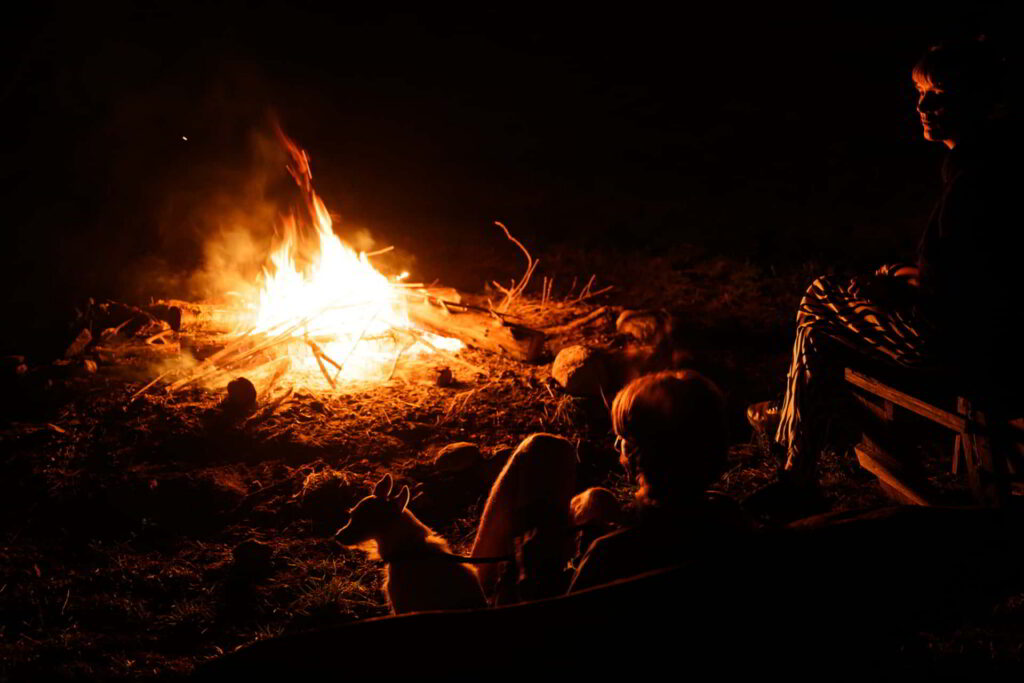
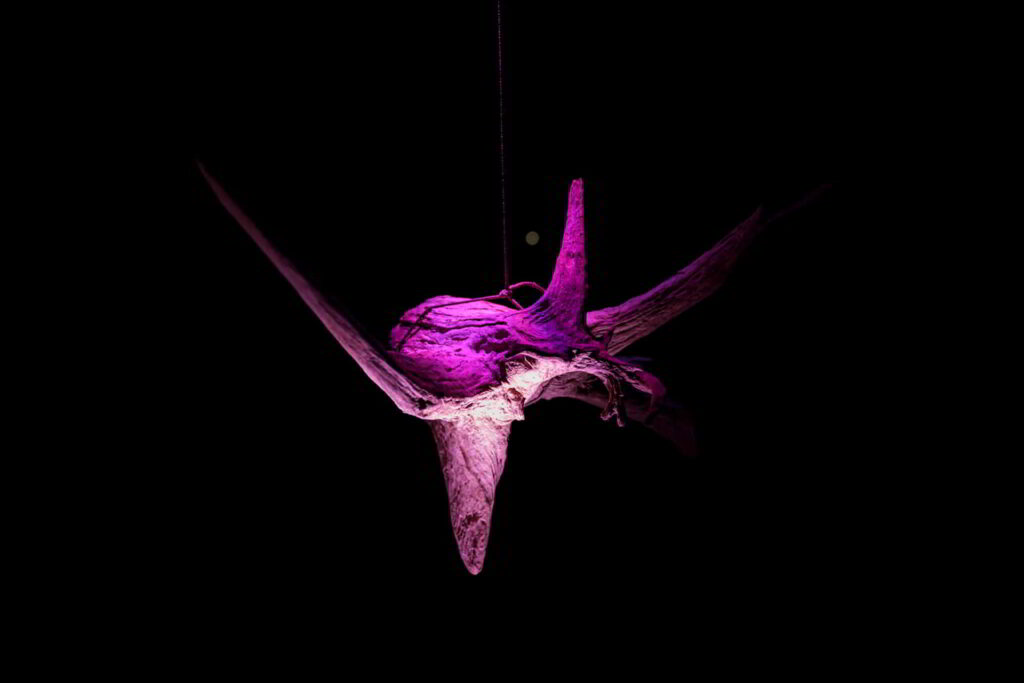
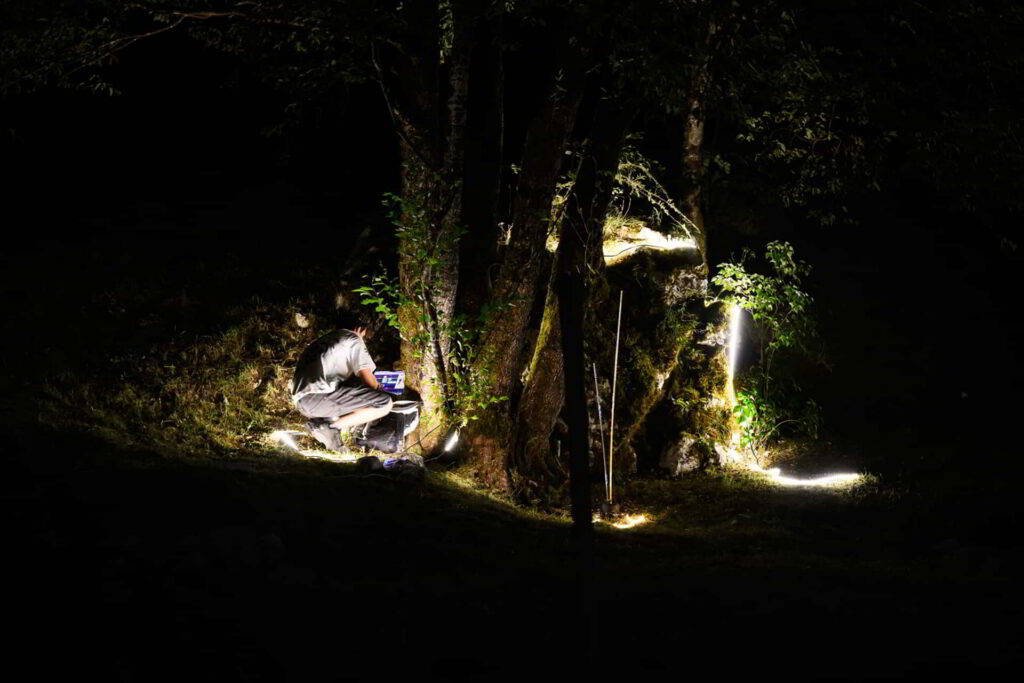
When the moon comes up from behind the mountains, the night pieces begin. In the field where Tilen Town once stood, a lighthouse calls with soft sounds. Inside a hollow tree, a red light pulses. The PIF people know how to light and use the place.
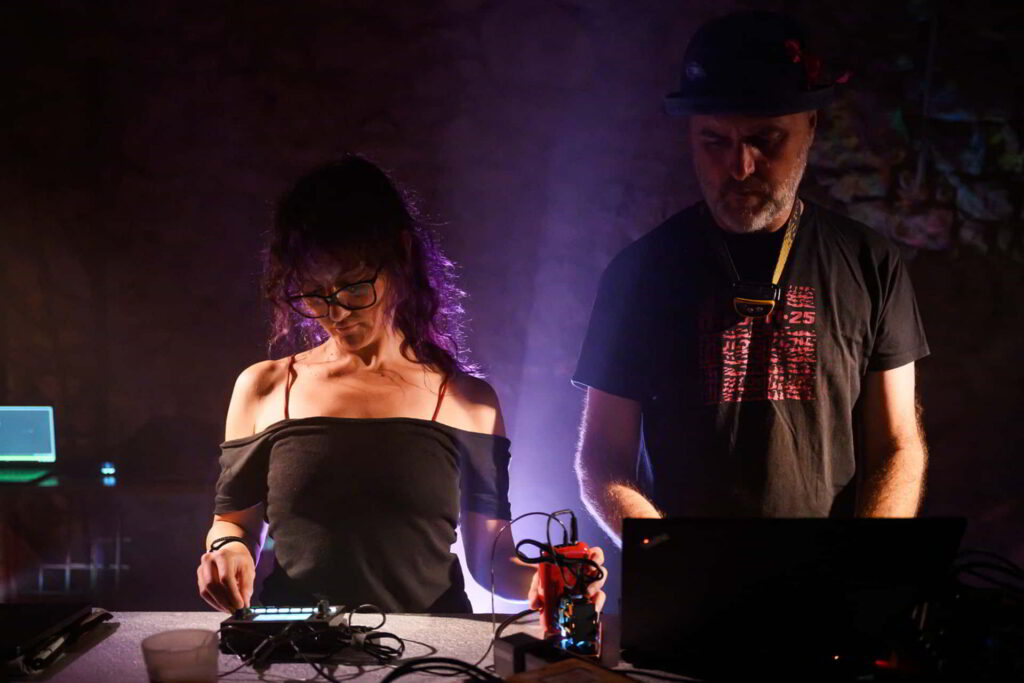
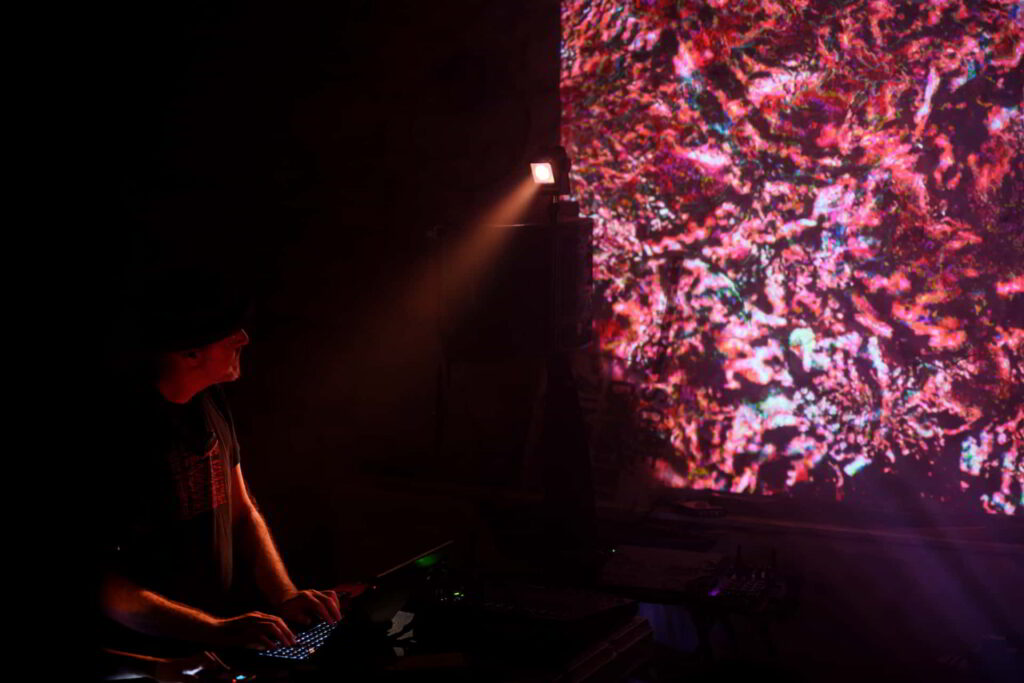
Inside, sets by Shu, Moira and Roger, Bernhard, Toyota Vangelis, Omar and Turbulente, Jakob and Matjaž, Blaž and Dasha, Ahac and Blažen. Music and live coding against the walls of the shed. Hard noise next to clips of writhing bacteria. Deep soundscapes, lasers, DJs who do not stop between the table and the floor. Everyone dances. It starts almost an hour later than planned, because we were too busy talking, tuning, eating and setting up: the famous PIFtime.
Circuits that go on growing
We come back with our heads full of ideas. With more biodatas in the world, with new friendships, with a wish to continue what opened there. That is what PIFcamp is: a week surrounded by people who want to make beautiful and strange things, and who have no problem showing you how.
Growing Circuits, in the end, was not only a motto. It was what was happening on the tables, in the river, on the court at dusk and in the shed until the body could take no more.
Sound of the sound installation in the Soča river
Gallery of PIFcamp 2026 – Photographs by Katja Goljat