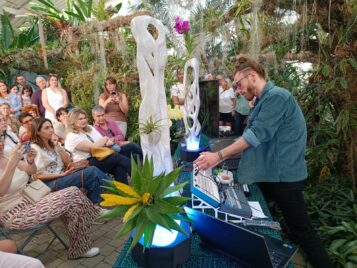
From 20 to 22 October 2026, Zafra (Badajoz) hosted the 9th Culture and Ruralities Forum, organised around shared geographies, border cultures and cross-border cooperation. In the hall of the Central Pavilion of the Fairgrounds, MolinoLab —a space for artistic and cultural experimentation based in Sancti-Spíritus (Salamanca)— presented Sinfonía Biótica and an interactive table designed so that the public would not only look, but could try, ask and listen.
Sinfonía Biótica is an immersive virtual reality experience created with a grant from the Ministry of Culture. In it, humans, plants and fungi collaborate in a unique audiovisual piece: each organism contributes on the basis of electrical impulses, movements and interactions, and each visit generates a different composition. At the Forum, Fernando Fernández Sánchez —artist, designer and founding member of MolinoLab— accompanied the mediation with the public on Tuesday 20, from 17:30 to 19:30, and on Thursday 22, from 12:15 to 14:15.
What was on the table
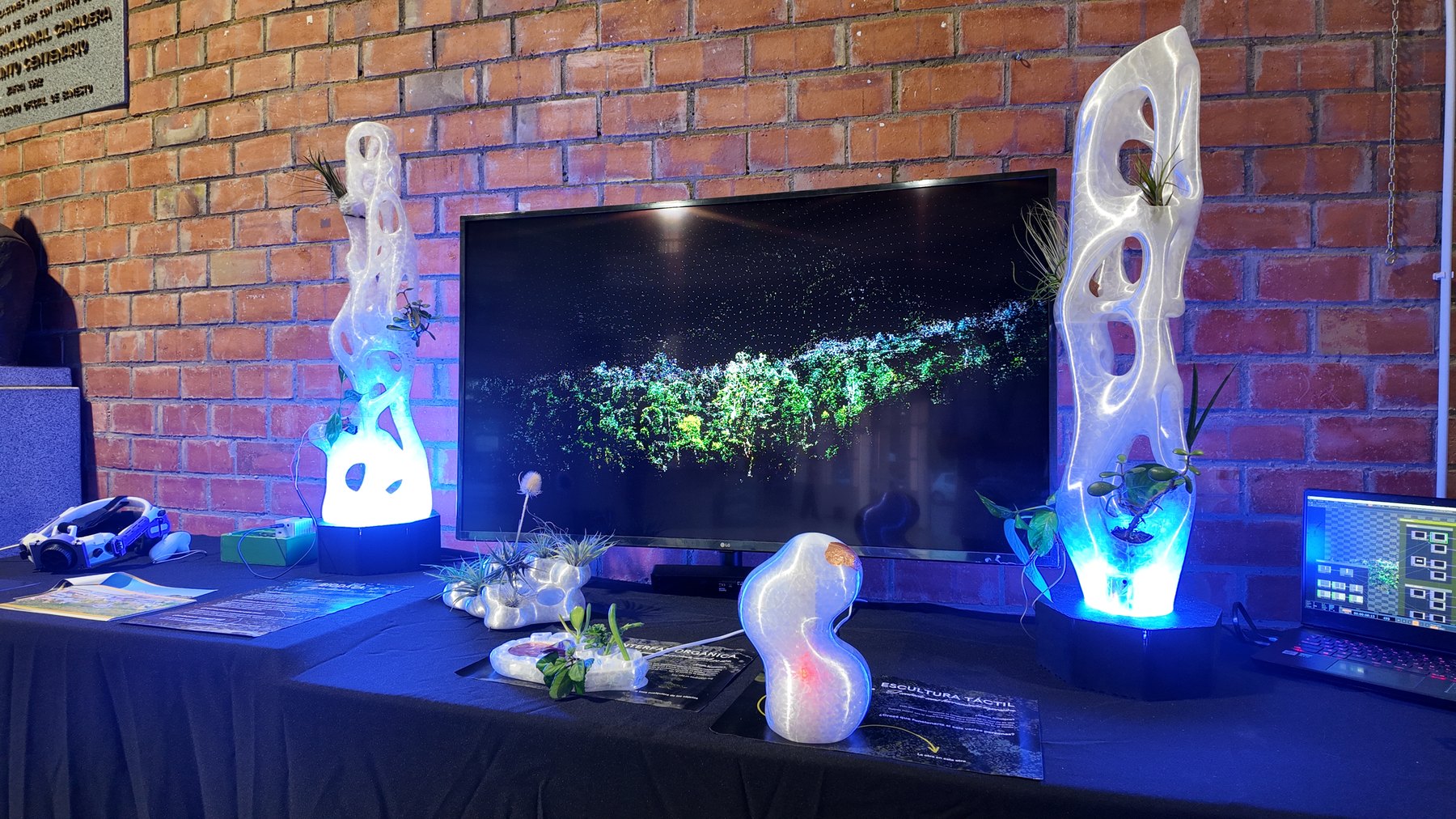
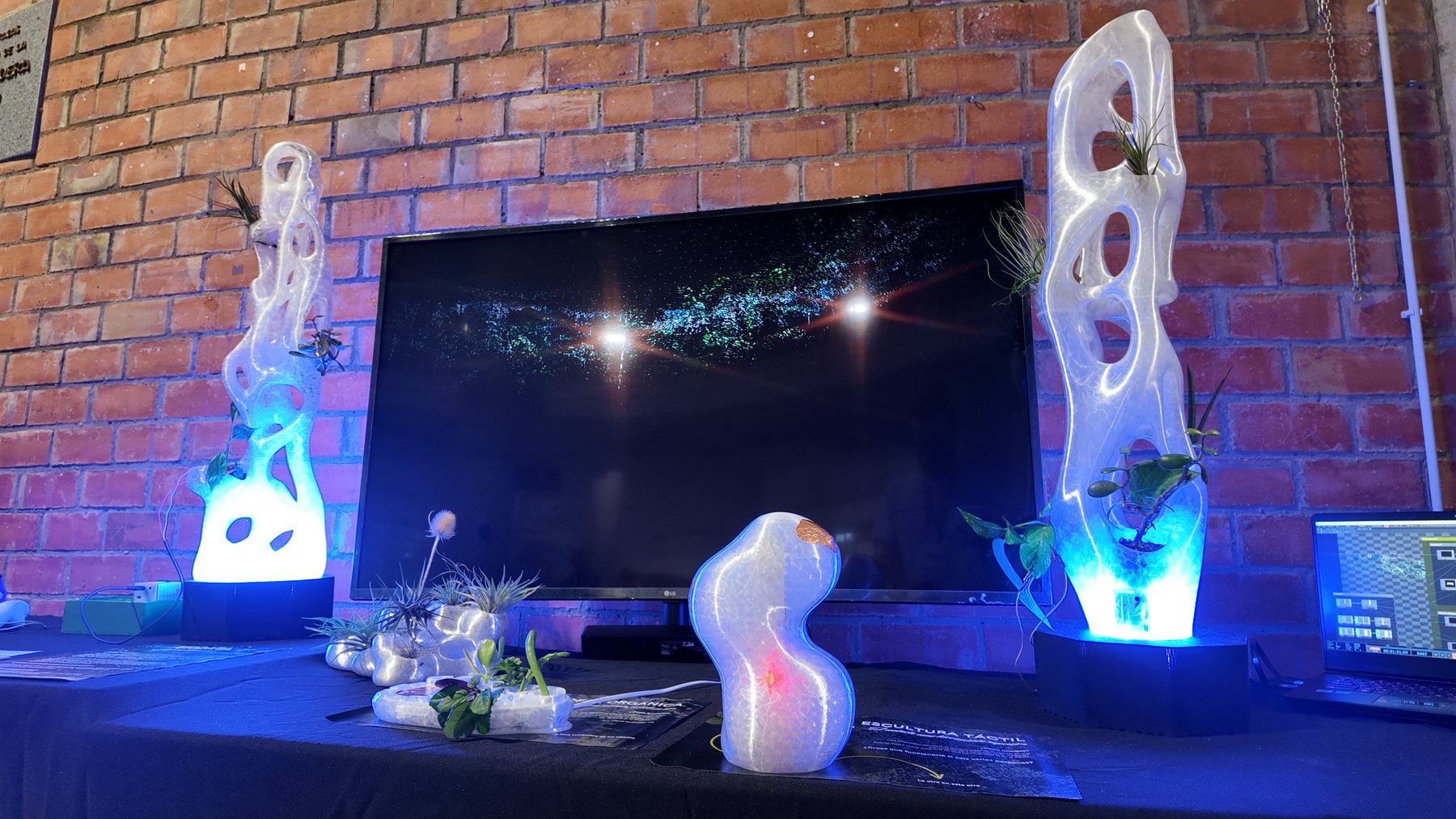
Besides the virtual reality headset, MolinoLab set out a table installation with several technological instruments. It was not a product stand or a closed demo: it was a mediation device. On the one hand, digitised environments based on real spaces in Spain and Portugal, both natural and industrial, were shown. Those landscapes —captured and digitally reconstructed— appeared on the screen as scenes that the visitor could walk through or modify within the logic of the project.
On the other, biodata was explained through several sculptures with living plants. The connected organisms contributed electrical variations that fed the soundtrack: the music did not arrive as a fixed track, but as a sound fabric that changed with the activity of the plants present. The aim was not to “do magic” with the technology, but to make visible —and audible— processes that usually fall outside the cultural conversation about rural life.
Two ways of entering the piece
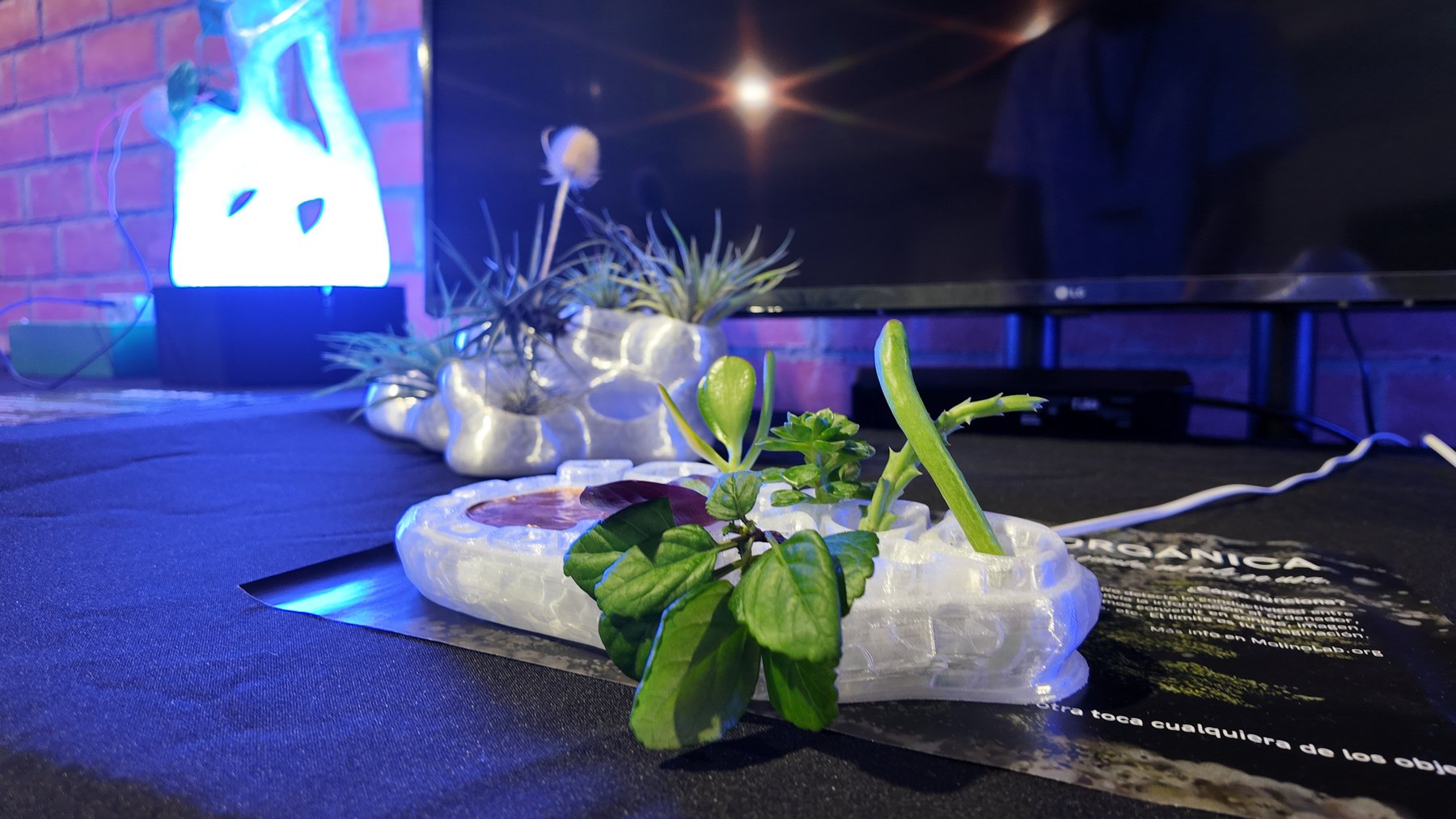
The table also included two devices designed for people. The first was an organic interface with succulent plants: by interacting with it, it was possible to generate notes and bring about visual changes in the virtual environments. The human gesture did not remain apart from the digitised landscape; it was added to the composition.
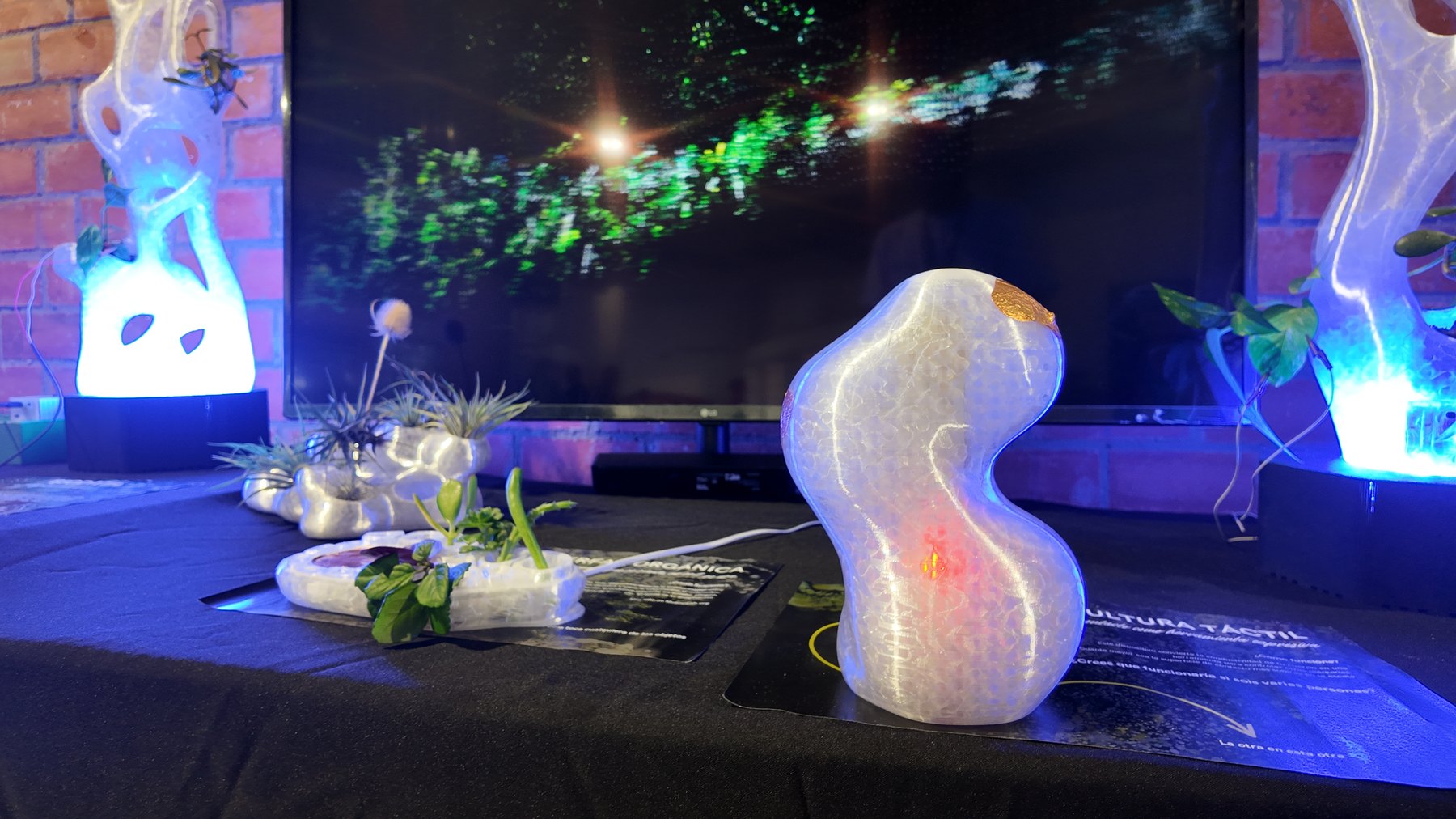
The second device responded to electrical conduction and to contact between skins. Depending on how that contact was established, the sound became higher or lower. You do not need a technical manual to understand what was happening: it was enough to come closer, touch, and notice how the body entered the sound chain together with the plants. That simplicity matters. In a forum that was talking about borders, cooperation and living heritage, the installation proposed another porous border: between the human and the non-human species, between a rural workshop and an institutional hall, between biological data and cultural experience.
Why it made sense at the Forum
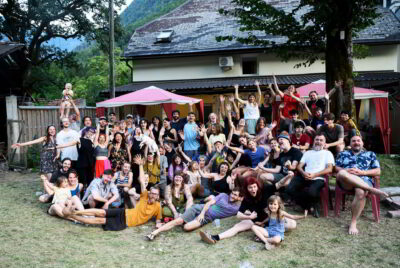
MolinoLab has been working for years at the intersections of art, nature and technology, hosting residencies, workshops and gatherings outside the urban circuit. Taking Sinfonía Biótica to Zafra was part of that same logic: taking an interspecies investigation out of the laboratory and putting it to the test with diverse audiences —cultural management, education, contemporary creation, rural development— without giving up clarity.
The Forum’s official presentation situated the installation as a dialogue between species and a tribute to Iberian and Macaronesian biodiversity: a way of translating living matter from our forests into data and algorithms. From MolinoLab’s point of view, that translation does not seek to replace the territory, but to give it presence again inside spaces of debate where the rural sometimes appears only as a topic. Here the rural entered as a sound and visual co-author.
Anyone who came up to the table could ask how biodata is read, how a tree or an industrial warehouse is digitised, or what changes when a plant and a person share the same piece. You did not need to have used virtual reality before. Curiosity and a moment of listening were enough.
For MolinoLab, Zafra was not only a date in the calendar: it was a chance to open up the process, share tools and remember that culture in rural settings is also built by touching, measuring, getting it wrong and listening again.